9 minutes read
For buyers considering an off-grid prefab home, the important question is not what off-grid means, but how the different systems work together in practice.
Electricity, water, wastewater, heating and cooking all need to be considered as part of one integrated design. Each system has its own cost, maintenance requirements and limitations, and choices made in one area often affect another. A heat pump, for example, may reduce dependence on delivered fuel, but it also increases electricity demand and therefore affects the size of the solar array and battery storage.
The most successful off-grid homes are usually those where these systems are planned together from the beginning rather than added individually later.
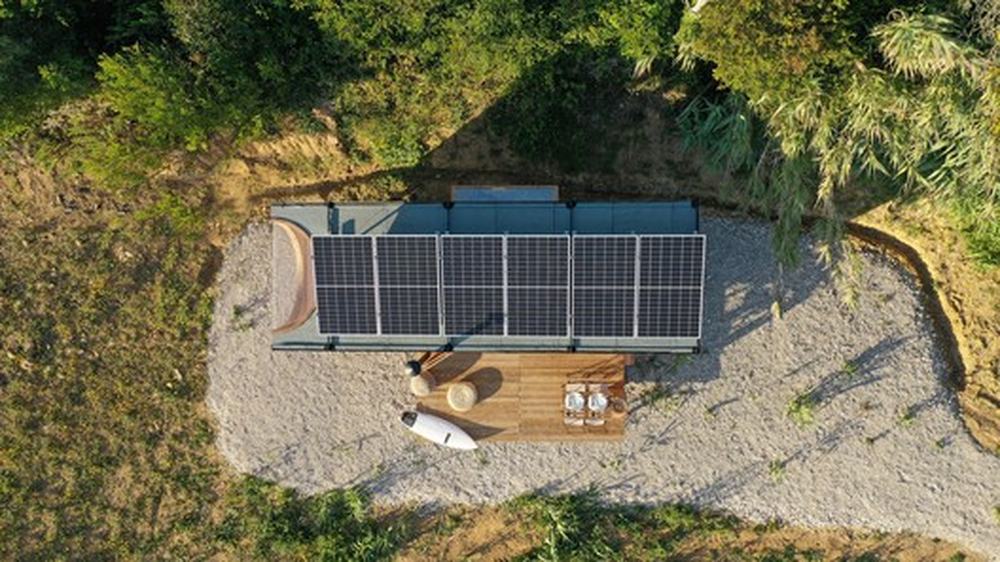
Electricity: solar and battery storage need to be sized together
Solar photovoltaic panels paired with battery storage are the standard starting point for most off-grid prefab homes.
The solar array determines how much electricity the house can generate, while the batteries determine how long that electricity remains available when solar production drops. This distinction matters because a system that performs comfortably during bright summer conditions may behave very differently during several consecutive cloudy days in winter.
When comparing systems, ask for the battery capacity in kWh, not just the installed solar capacity in kW.
The design should also be based on local conditions rather than generic assumptions. Solar production varies significantly with latitude, orientation, shading and climate, so the system should be sized around the periods of lowest realistic generation rather than annual averages alone.
Household demand is equally important. Cooking, hot water, heating, air conditioning, home-office equipment and electric vehicle charging can all place significant loads on an off-grid electrical system.
A backup generator can therefore still make sense, particularly in locations where winter solar production is low or weather conditions are unpredictable. It may rarely be used, but it provides resilience if battery levels fall too far during an extended period of limited solar generation.
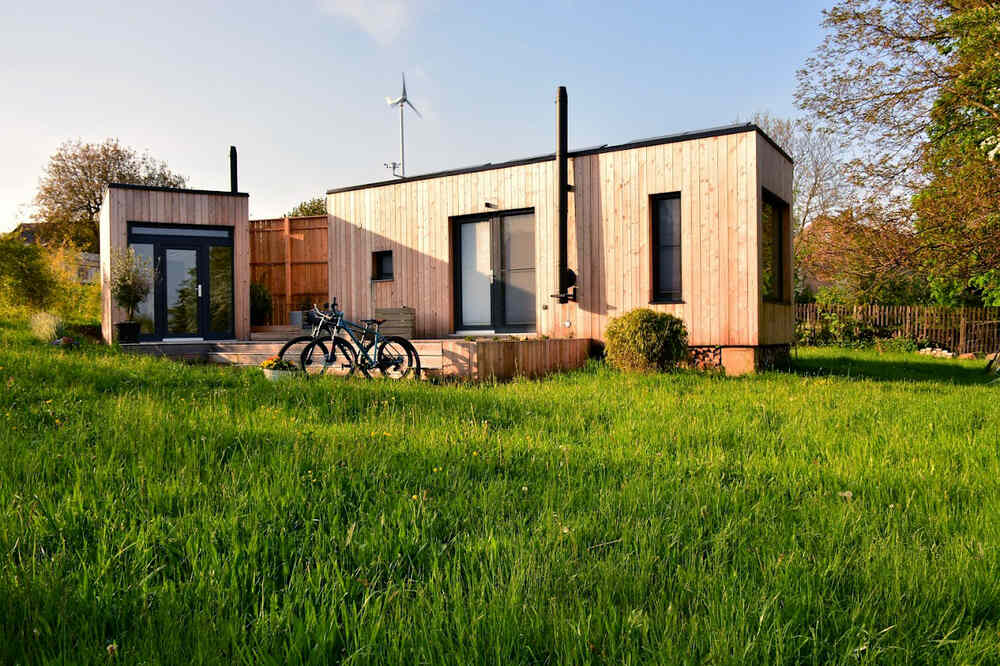
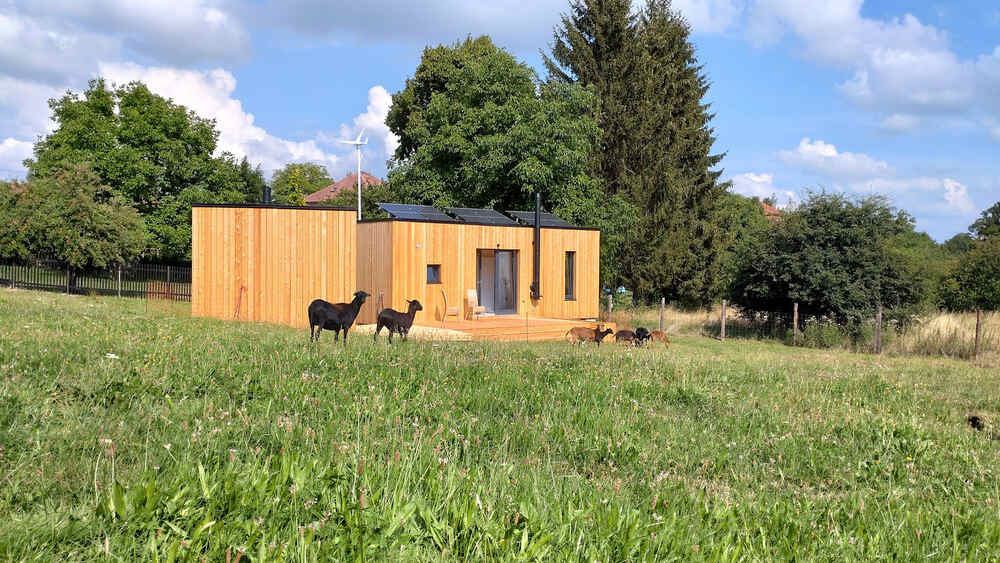
Small wind turbines are sometimes included in off-grid packages, although they only make sense on sites with consistently favourable wind conditions. At residential scale, maintenance, vibration and noise can outweigh the additional electricity generated if the site is not particularly well suited to wind.
Thinking about building?
Share a few details about your project and receive quotes from our network of vetted manufacturers.
GET YOUR QUOTESThe key question is not how much electricity you can generate on a good day, but how long the house can operate when conditions are poor.
Questions to ask yourself
- Will the house be occupied full-time or only occasionally?
- Will heating, hot water and cooking all rely on electricity?
- Do you plan to charge an electric vehicle at home?
- How much autonomy do you want during several days of low solar production?
Water: sourcing, storage and filtration are three separate problems
Off-grid water normally comes from one or a combination of three sources: a drilled well, rainwater collection or hauled water.
A well can be the most reliable long-term solution where geology and permitting allow it, but drilling costs and groundwater depth vary enormously from one site to another.
Climate change is also making groundwater availability less predictable in some regions. Prolonged droughts and changing rainfall patterns are affecting areas that historically experienced few water shortages, which means previous local experience is no longer always a guarantee of future availability.
For this reason, a local hydrogeological assessment is advisable before assuming that a well will provide sufficient water throughout the year.
Rainwater collection is another common solution and can integrate particularly well with prefab construction because the collection system can be incorporated into the roof and drainage design from the outset.
The roof, however, is only the first part of the system.
You also need enough storage capacity to bridge the driest period of the year. Annual rainfall figures alone can be misleading because two locations receiving the same total rainfall may experience it very differently throughout the year.
A large tank may therefore be more important than a large collection area in regions where rainfall is concentrated into relatively short periods.
Water intended for drinking also needs appropriate filtration and treatment. Depending on local regulations and water quality, this may include sediment filtration, activated carbon filtration and UV disinfection.
Greywater recycling can further reduce consumption by reusing water from showers or washbasins for purposes such as toilet flushing or irrigation. It can reduce pressure on the main water supply, although it does not replace the need for a reliable primary source.
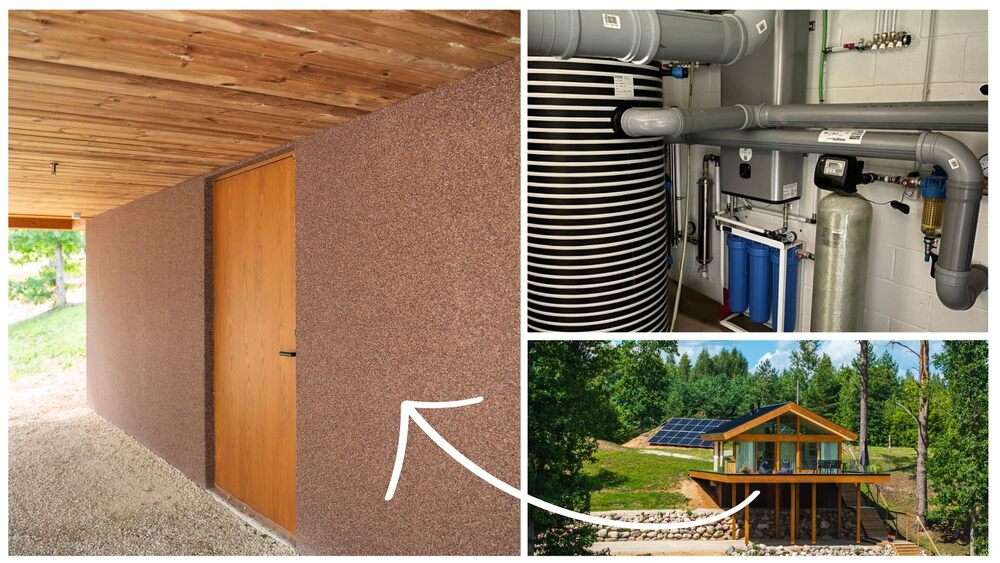
With off-grid water, annual rainfall matters less than whether your storage can carry you through the driest weeks of the year.
A useful way to think about the system is as three separate questions:
- Source: where will the water come from?
- Storage: how long can the household manage without new supply?
- Treatment: what is required to make that water suitable for its intended use?
Wastewater: septic systems, treatment systems and alternative toilets
Without a connection to the municipal sewer network, wastewater needs to be managed directly on the property.
A septic tank with a drainage field remains one of the most common solutions. It is well understood, relatively simple and suitable for many rural sites, provided the soil and groundwater conditions allow it.
The drainage field is often the limiting factor rather than the tank itself. Soil permeability, groundwater level, plot size and setbacks from wells or property boundaries can determine whether a conventional septic system is possible.
Some projects use compact wastewater treatment plants instead. These systems treat wastewater to a higher standard before discharge and can be useful where conventional drainage conditions are difficult, although they normally require electricity, servicing and regular maintenance.
Composting toilets are another option, particularly for cabins, tiny homes and low-occupancy properties. They reduce water use substantially and can remove blackwater from the wastewater equation altogether.
However, they require more involvement from the occupants and may not be suitable for every household or every local regulatory framework.
Wastewater planning should therefore begin with the site, not with the house. It is much easier to adapt the design around known ground conditions than to discover after purchasing the home that the preferred wastewater system cannot be installed.
Questions to ask yourself
- Has the soil actually been assessed?
- How high is the groundwater table?
- Is there enough space for the required drainage or treatment area?
- What maintenance will the system need over 10 or 20 years?
Heating and cooking: start with the building envelope
For an off-grid house, one of the most important energy systems is the building envelope itself.
Good insulation, airtight construction, high-performance windows and careful control of thermal bridges reduce the amount of heating and cooling the building requires. This can substantially reduce the size and cost of the systems needed to maintain comfortable indoor temperatures.
This is one of the areas where prefab construction can work particularly well. Factory-built wall and roof assemblies can offer consistent insulation and airtightness when properly designed and manufactured.
Before discussing heating equipment, ask about the thermal performance of the walls, roof, floor and windows.
A highly efficient building may be able to rely on a relatively small heat pump, wood-burning stove or other compact heating system. A poorly insulated one may require significantly more electricity or fuel throughout the year.
Heat pumps are increasingly common in off-grid homes, particularly in milder climates and in highly insulated buildings. Their efficiency can make them attractive, but their electrical demand must be included when calculating solar generation and battery capacity.
Wood-burning stoves remain one of the simplest heating options for remote locations, especially where firewood is readily available. They require fuel storage, regular maintenance and physical handling, but they can provide heating without adding significant electrical demand.
LPG or propane is another common option for heating, hot water or cooking. It avoids dependence on the electricity system for every household function, although it still requires periodic fuel deliveries.
Cooking choices also matter more than they might in a grid-connected home. Induction cooking is efficient but places a relatively high short-term load on the electrical system. Gas cooking reduces that load but introduces another fuel supply.
There is no universally correct solution. The best combination depends on climate, occupancy, access to fuel and how much electrical autonomy the owner wants.
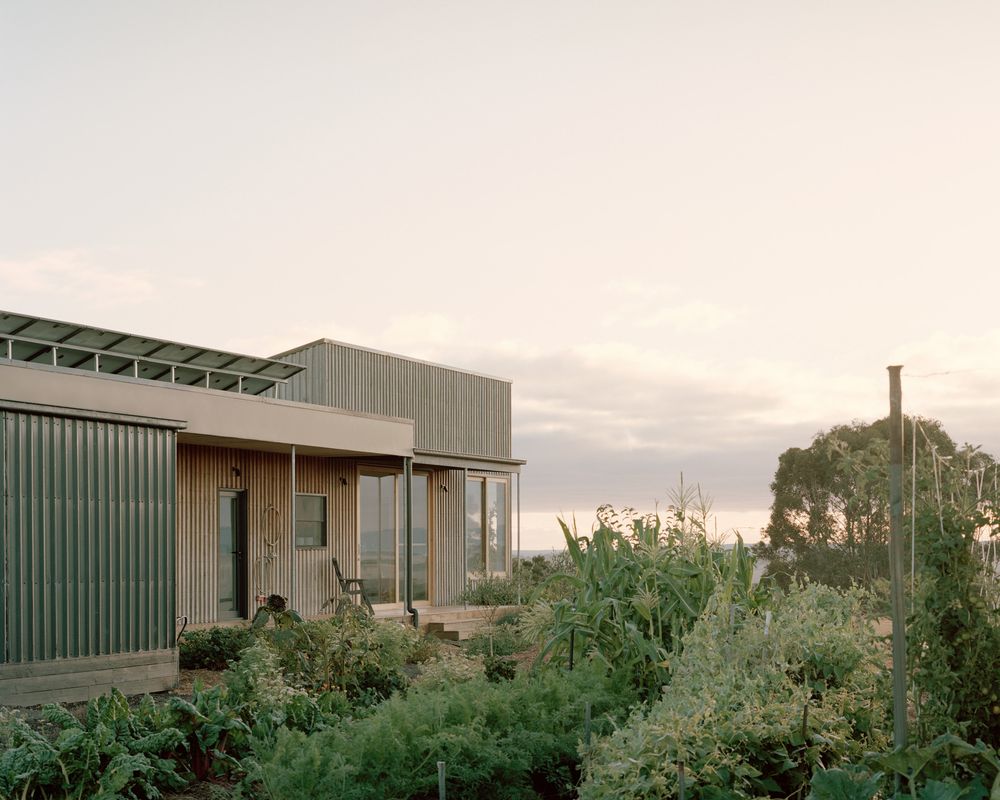
In an off-grid home, reducing demand is often cheaper than increasing supply.
That makes the building envelope one of the first things to investigate, not an afterthought.
Storage and redundancy matter as much as generation
Off-grid design is fundamentally about managing periods when resources are temporarily scarce.
- For electricity, that means battery capacity.
- For water, it means tank capacity.
- For heating fuel, it means storage.
The system should not be designed around a typical sunny day or an average rainfall month. It should be designed around periods when conditions are less favourable.
That does not necessarily mean dramatically oversizing every component. It means understanding where redundancy is most valuable.
A relatively inexpensive backup generator may provide more resilience than adding a very large battery bank. An additional water tank may offer more security than increasing roof collection area. A wood stove may act as backup heating even if the house normally relies on a heat pump.
The objective is not simply independence, but resilience.
Household demand needs to be realistic
One of the easiest mistakes to make when designing an off-grid prefab home is to underestimate how much electricity and water the household will actually use.
The difference between a low-consumption holiday cabin and a permanently occupied family home is substantial.
Air conditioning, electric cooking, washing machines, tumble dryers, computers, pumps and electric vehicles can quickly increase electricity demand.
Water consumption also varies dramatically depending on occupancy, showers, appliances, gardening and lifestyle.
The design should therefore start with an estimate of daily demand rather than with a standard equipment package.
It is also worth allowing for future changes. A home designed around the consumption of two people may later accommodate a family, additional appliances or an electric vehicle.
Building some spare capacity into the system can be considerably easier than upgrading storage or generation after the house is complete.
Questions to ask yourself
- How many people will realistically use the house in five years?
- Could electricity demand increase later?
- Is the system sized for current habits or future ones?
- Which services would you consider essential during a prolonged outage or shortage?
Questions to ask before buying an off-grid prefab home
When discussing an off-grid package with a manufacturer