6 minutes read
Buyers spend weeks comparing floor plans. They spend days comparing finishes, cladding options, window specifications.
Almost none of that time goes into a much plainer question: will this company still be standing when the house is due?
It should. Construction and manufacturing are capital-intensive businesses running on thin margins, and both are unusually exposed to material shocks, supply disruption and the kind of cash-flow squeeze that has nothing to do with the quality of the design.
When a manufacturer fails mid-build, the buyer is usually left holding a half-finished structure, a deposit that has gone with the company, and very little legal ground to stand on.
None of that shows up in a brochure. Here is what does, if you know where to look.
Why manufacturers fail more often than buyers expect
Prefabricated construction is front-loaded. Factories, tooling and skilled labour all have to be paid for long before a home is delivered, and much of that spending happens before the final invoice is settled.
Many manufacturers use customer deposits to fund the very build those deposits are attached to — a system that works well until a downturn, a weak quarter of orders, or a spike in raw material costs disrupts the sequence.
Smaller and younger manufacturers carry more of this risk than established ones, simply because they have less reserve and fewer projects running in parallel to absorb a bad month.
That isn’t an argument for buying only from large, decades-old firms; some of the best design work in this industry still comes out of small studios. It’s an argument for treating financial due diligence as a normal part of the process, regardless of how strong the portfolio looks.
Thinking about building?
Share a few details about your project and receive quotes from our network of vetted manufacturers.
GET YOUR QUOTESStart with the public record
Almost every country keeps a public business registry, and checking it takes a few minutes: registration status, incorporation date, whether the company is active, dissolved, or somewhere inside an insolvency process.
This one step rules out the worst case — a business that has already wound down on paper but is still running a live website and taking deposits.
Most registries also show outstanding liens, unresolved judgments or bankruptcy filings. If a manufacturer is vague about its registered legal name, or about which entity you would actually be contracting with, treat that as information in itself.
How long have they actually been building?
A company can describe itself as “established since 2015” while having built homes for only the last two years. Marketing copy tends to blur the difference between when a business was founded and when it started doing what it now sells.
Ask how long they’ve produced this specific product, not the company in general. A manufacturer that pivoted from garden buildings eighteen months ago carries a different risk profile to one that has built modular homes for a decade.
It’s also worth asking how many units have actually been completed and delivered, rather than how many are “in production.” A large order book with few finished deliveries can be a sign of a business that has taken on more than it can currently fund.
Reviews tell you more than testimonials do
Testimonials on a manufacturer’s own site are the least reliable source available, for the obvious reason that no company publishes the complaints.
Independent reviews on Trustpilot, Google or local consumer sites are worth far more, particularly once you filter for recency. A manufacturer with excellent reviews from three years ago and silence since may simply have scaled back — or may be in difficulty.
The strongest signal, though, is a manufacturer willing to put you directly in touch with two or three recent customers. Some reluctance is normal; buyers value their privacy. A flat refusal to offer any contact at all is not.
Visit the factory, if you possibly can
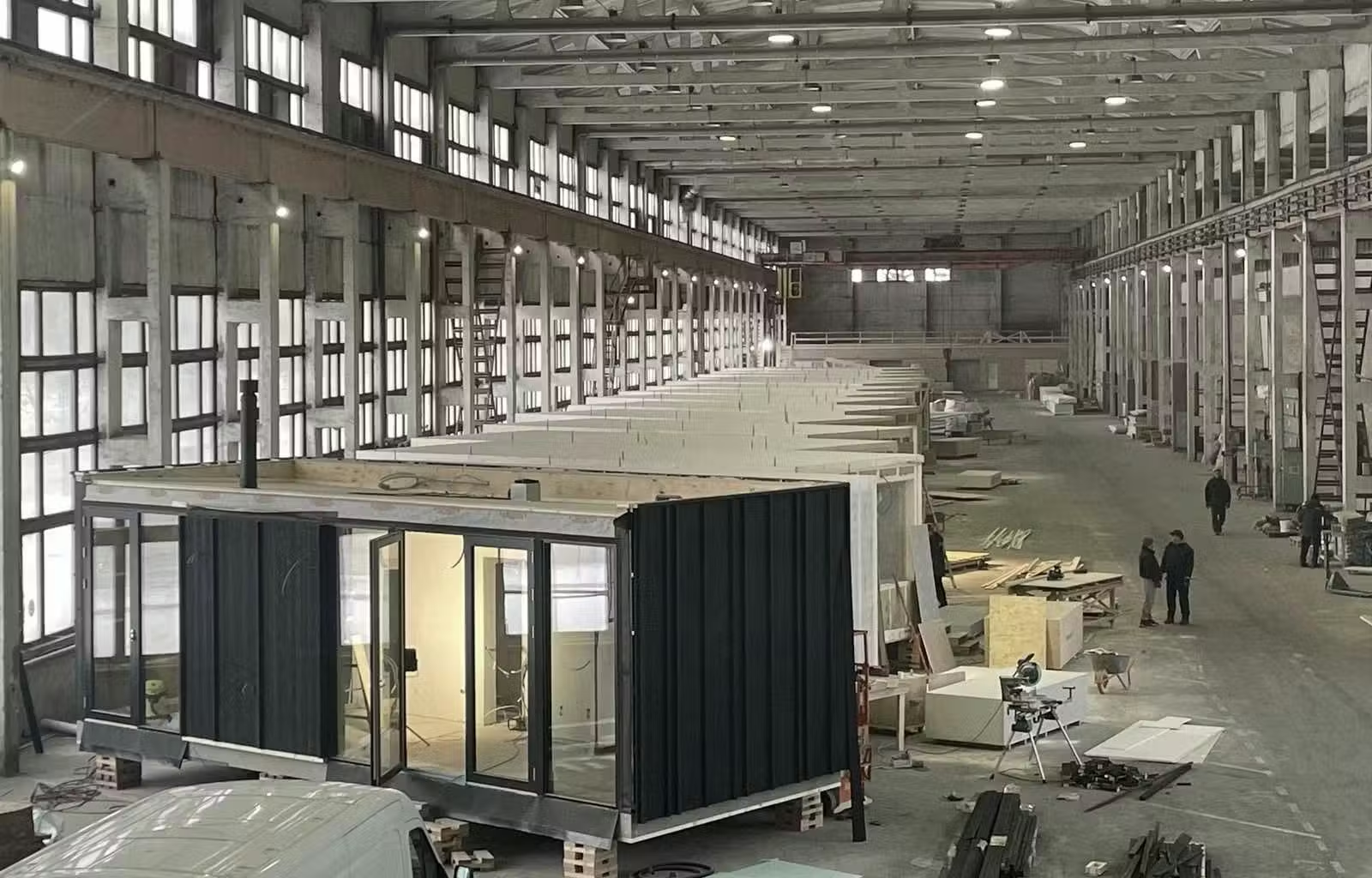
Twenty minutes on a production floor tells you more than a week of searching online. Look for:
- Visible work underway, rather than a space that looks underused
- Components built in-house, rather than subcontracted out to third parties whose stability you can’t check
- Current equipment, rather than signs of a business that hasn’t reinvested in years
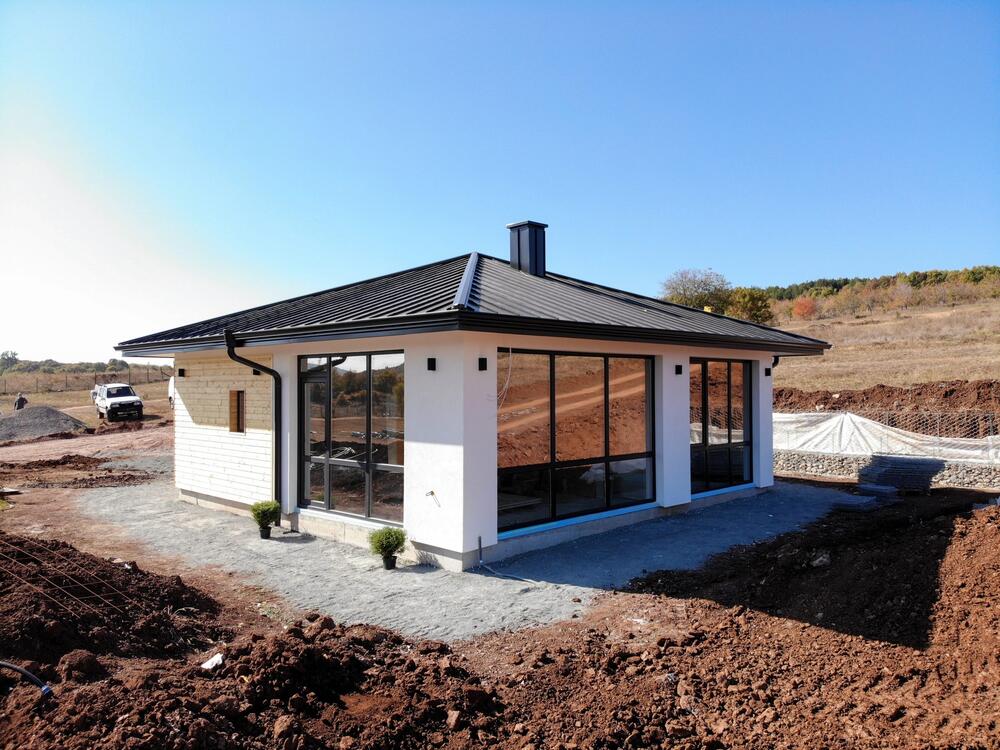
Where a visit isn’t practical, ask for a video walkthrough instead. A manufacturer confident in its own operation will usually agree without much fuss. One that stalls, or offers only polished marketing footage, is worth a second look.
Read the payment schedule as a risk document
This is the part most buyers skip past, and it matters more than almost anything else here.
A large upfront deposit — fifty per cent or more — with the balance due only on delivery, puts nearly all of the risk on your side of the table from day one.
A staged schedule tied to verifiable milestones does the opposite. It gives you an exit at every stage where something could go wrong.
Deposit, materials ordered, structure complete, factory completion, delivery: each stage is a natural checkpoint.
Ask what happens, contractually, if the manufacturer can’t deliver at any one of them, and whether part of your payment can sit in escrow with a third party rather than going straight into the company’s own account. Escrow is more common in some markets than others, but it costs nothing to ask.
Warranties only work if someone is left to honour them
A structural warranty backed by the manufacturer itself is only as good as the manufacturer. One backed by an independent insurer keeps protecting you even if the company later folds.
Buyers rarely ask which kind they’re being offered, mostly because sales conversations rarely bring it up unprompted.
A few patterns worth treating as warnings
- Pressure to sign quickly — “this price only holds until Friday” — paired with a demand for a large deposit
- Vagueness about the registered company name
- A flat refusal to arrange any kind of factory visit or call with existing customers
None of these alone rules a manufacturer out, but two or three together are reason enough to slow down before signing anything.
The short version
- How many homes has the company delivered in the last twelve months, against how many currently in production?
- Can you speak to two customers who took delivery recently?
- What share of the price is deposit, and is any of it held in escrow?
- What’s the position if the company can’t finish the project?
- Is the warranty backed by the company, or by an insurer standing behind it?
A confident, established manufacturer will answer all five without hesitation. One that answers only two or three is telling you something, whether or not it means to.
Where this leaves you
None of this replaces the pleasure of choosing a design you love. It simply means choosing it from a manufacturer likely to still be there in a year’s time.
If working through all of it feels like more than you want to take on alone, that’s exactly the groundwork our team at spassio does before a manufacturer ever reaches a buyer.
Get in touch, and we’ll help you find one suited to your project, already vetted.