8 minutes read
Manufacturers and transport experts on the journey from factory to site, and what buyers can do to make it go smoothly
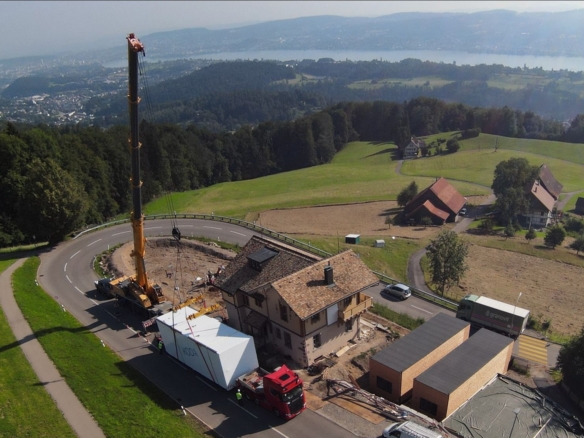
A modular house is built in a factory, but it still has to reach your plot, sometimes hundreds of kilometres away, on public roads, in all weathers. It is one of the parts of a project buyers think about least, and one where a single bad day can cause weeks of delay. We asked manufacturers, a freight forwarder and our own Sales Director for Ireland and the UK to tell us about a transport issue they faced, how they solved it, and what buyers can learn from it.

|
Erich Kivi
Head of Development, Revonia
|
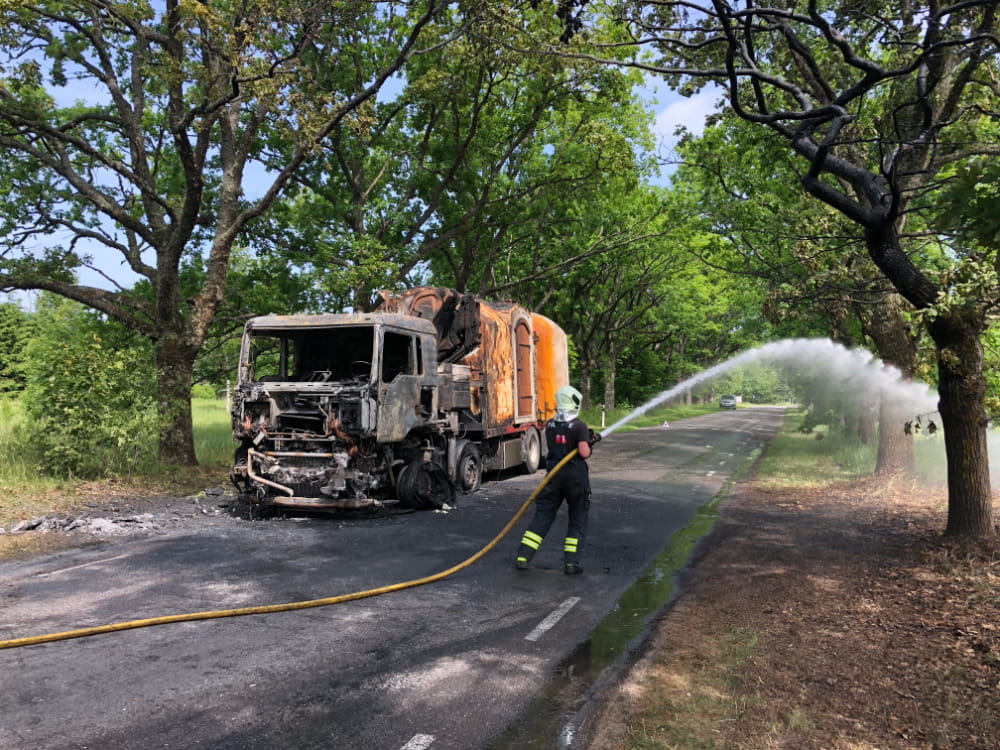
The issue: Halfway to the customer, the transport company’s lorry carrying one of our underground concrete cellars caught fire. By the time the fire brigade had put it out, the lorry was a write-off and the cellar had been sitting in the middle of the blaze. In places, the polyurethane foam insulation on the outside had burned away. It looked like the end of that delivery.
How we solved it: We brought the module back to the factory and inspected it thoroughly. The reinforced concrete shell was unaffected: concrete does not burn, and the vaulted structure held up exactly as designed. We cleaned the surface, sprayed on a fresh layer of insulation and sent it out again. On site, there was no sign it had ever been near a fire. The customer received a slightly late delivery, and a good story to tell.
What buyers should know: The fire started in the lorry, not the cargo, so the lesson is about who you trust with your module. Before delivery day, ask:
- Is the cargo insured in transit, for its full value?
- Who is the carrier, and how well maintained are their vehicles?
- If the module is damaged on the way, what happens: repair, replacement or a negotiation?
It is also worth asking what your module is made of, as some materials cope with a bad day on the road better than others.
Thinking about building?
Share a few details about your project and receive quotes from our network of vetted manufacturers.
GET YOUR QUOTES

|
Nikita Lancovs
CEO, Langino Logistics
|
The issue: Most problems with prefab house deliveries do not happen on the motorway. They happen in the last kilometre. The permits are in place, the escort is booked, a 13 m module is on the trailer, and the access road to the plot turns out to be a narrow lane with a tight bend, low branches, soft ground or no space for the crane. From that moment three things stand still and bill by the hour: the lorry, the crane and the escort. The waiting time, the second crane or the transfer to a smaller vehicle lands on the buyer, because the quote covered the road to the village, not to the foundation.
How we solve it: We treat site access as part of the quote, not as the driver’s problem on delivery day. Before confirming a price, we ask for photos or a short video of the road from the main road to the plot, the gate width, overhead lines and the place where the crane will stand. If anything looks doubtful, the last section is checked in advance, a road closure or parking is agreed with the municipality, and on a difficult plot a transfer point nearby goes into the quote as a line item instead of appearing on the invoice as a surprise.
What buyers should know: Check the access while the house is still on the drawing board, not when the lorry is on its way. When you compare transport quotes, ask what happens between the main road and the foundation: is the site check included, who pays the crane waiting time, and what is the plan if the lorry cannot get in? A quote that does not answer these questions is not the cheapest one: it is the one with an open end. Ten minutes of photos sent to your forwarder cost nothing. A convoy waiting at a closed gate costs a day.
“Ten minutes of photos sent to your forwarder cost nothing. A convoy waiting at a closed gate costs a day.”

|
Paul Grant
Sales Director Ireland & UK, Spassio
|
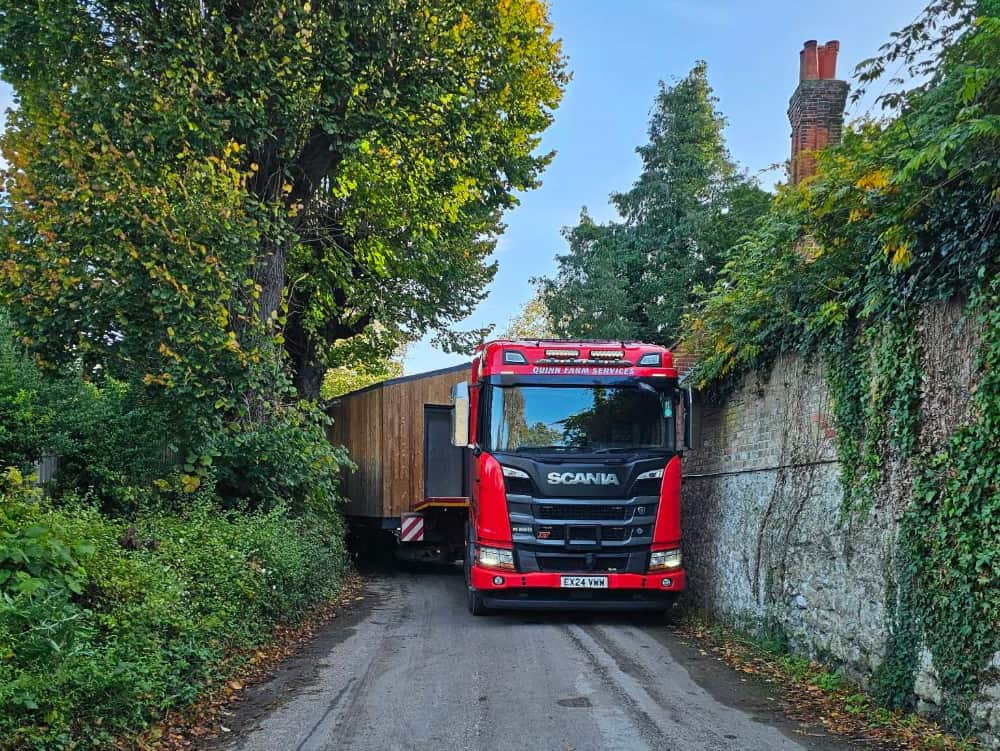
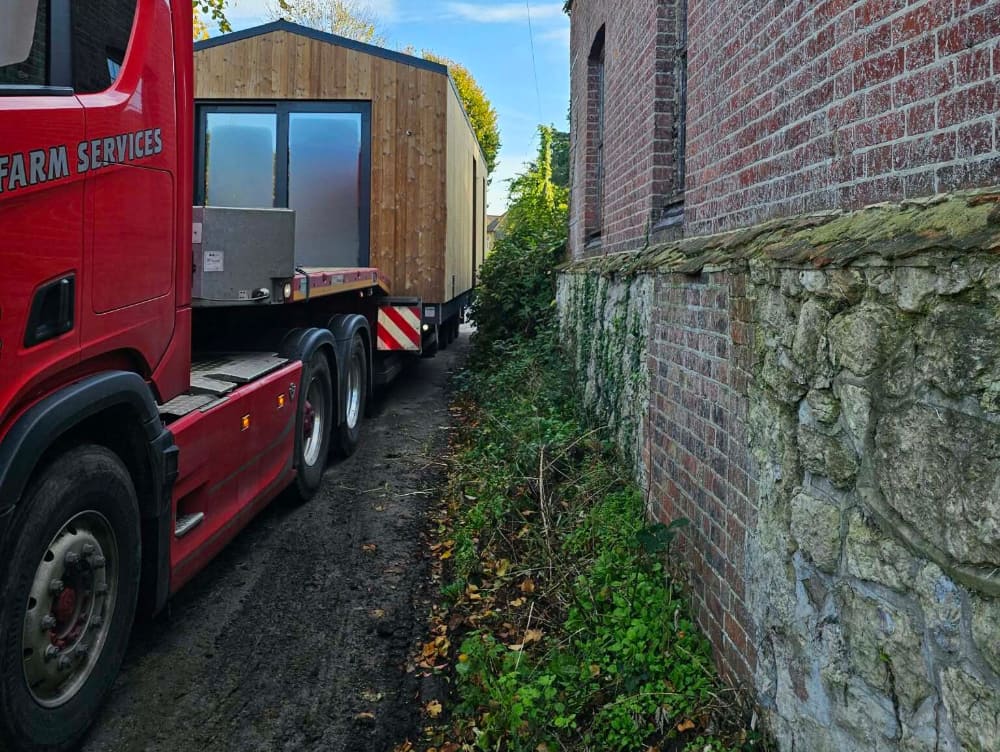
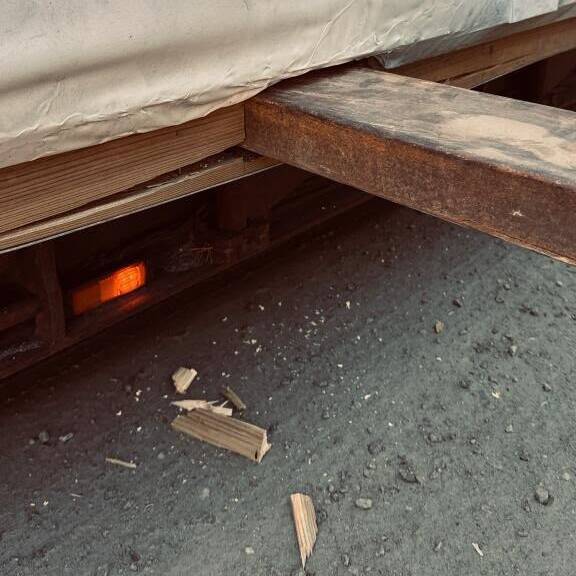
The issue: We recently had a delivery of six cabins and a sauna travelling from a factory in Poland to a client in the UK. The journey itself went perfectly: the lorries reached a holding yard two miles from the client’s home with no delays at all. The problem was the last two miles. The entrance to the client’s property was extremely tight. He had already cut back trees and taken down part of a wall to widen it, but when the first lorry arrived, the driver saw that overgrown trees were still in the way. Getting the first cabin round the corner took more than a hundred manoeuvres, forward and back, and the low Georgian roof of an outdoor kitchen, only about 2 m high, made it even harder.
How it was solved: The driver told the client that the remaining trees would damage the cabins, so the client cut back more branches on the spot. The hauliers then swapped the trailers for shorter ones, just over a metre shorter, for the remaining cabins, which made an enormous difference. Their steering axles, with wheels that turned along with the lorry, helped too. All the cabins and the sauna were on site by the end of the day. Some had scrapes on the sides and corners, and a few corner pieces will have to be replaced, but the client was delighted, and acknowledged that the access had been the issue, not the transport.
What buyers should know: International transport is rarely the hard part. Your own driveway is. Clearing “most” of the trees is not enough: walk the route from the road to the foundation and imagine a cabin several metres wide and over 3 m tall passing through it. Check overhanging branches, low roofs, walls and corners, and ask your manufacturer whether shorter trailers or steering axles are available if access is tight.
Planning a prefab project?
Share a few details about your project and receive quotes from our network of manufacturers.
GET YOUR QUOTES

|
Gvidas Girdeikis
Sales Manager, MCabin Line
|
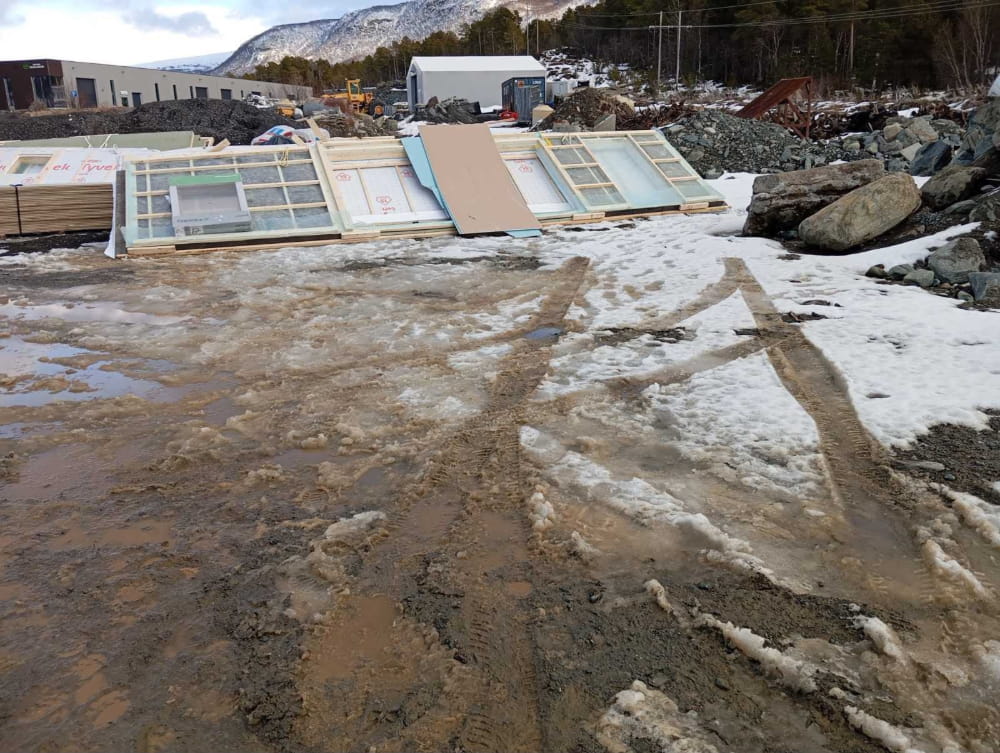
The issue: We arrived with the segments of a house to find that the client had prepared nowhere suitable to unload them. The only space available was a wet, muddy field, and the segments had to be set down there.
How we solved it: We unloaded as carefully as the ground allowed, but working in deep mud makes every lift slower and riskier, for the crew and for the house itself.
What buyers should know: We plan the factory loading and the public route, but the unloading area on your plot is your responsibility. Before delivery day:
- Prepare a firm, dry, level area close to where the house will stand, large enough for the lorry and the lifting equipment.
- Think about the weather: ground that is solid in summer can turn to mud after a week of rain.
- Check that the access road on your land can take a heavy lorry, and that it is clear of trees and low branches.
Ask your manufacturer exactly what the unloading area needs. A little ground preparation saves a great deal of trouble on the day.
Gvidas also shared a second story, this time about the lifting equipment:
The issue: Our houses come with built-in forklift pockets, and we give clients their exact width and measurements well before delivery. Even so, clients sometimes book whatever forklift is available locally. More than once, the forks turned out to be too wide for the pockets, and the house simply could not be unloaded.
How we solved it: The pockets cannot be stretched, so the only solution was to find suitable equipment. That meant waiting, with the lorry and crew standing by at extra cost, until the right forklift arrived.
What buyers should know: If you are hiring your own lifting equipment, the manufacturer’s specifications are not a suggestion. Before delivery day:
- Send the manufacturer’s lifting requirements directly to the forklift or crane company, and ask them to confirm in writing that their equipment matches.
- Check the weight and dimensions of each module or segment, not just the house as a whole.
- Make sure the ground where the equipment will stand is firm and level.
When in doubt, ask. A two-minute question before delivery can save a whole day.
Every journey from factory to plot is different. Sometimes trouble strikes on the open road, and there the best protection is a reliable carrier and insurance that covers the whole trip. But most of the stories our contributors shared happened in the last mile. Permits, escorts and route planning are the haulier’s job, but the final stretch onto your land, the access road, the gate, the trees, the ground and the space for the crane, is usually yours. Walk it, photograph it and share it with your manufacturer while the house is still being designed, not when the lorry is on its way, and agree in advance who pays if the lorry cannot get in.
Is there a question you would like our next panel to answer? Send us an email at [email protected] and let us know.