7 minutes read
The Estonian Advantage in Prefab Housing
Estonia’s rise to the top of the prefab housing market is built upon its skilled workforce, supportive government policies, and sustainable forestry practices. Estonian companies adhere to the highest certification levels in woodhouse production in Europe, ensuring that all homes meet rigorous quality and environmental standards. In 2022 alone, the Estonian woodhouse industry achieved an impressive export value of €539 million, underscoring its strong position in the international market.
The Estonian prefab industry’s export footprint reaches over 70 countries, including key markets in Scandinavia and Germany, as well as regions as diverse as Japan, South Africa, and South Korea. The top export destinations in 2021 were Germany, Norway, Sweden, the UK, the Netherlands, Finland, France, Denmark, Austria, Switzerland, the Czech Republic, and Iceland, demonstrating Estonia’s global appeal.
Leading Estonian Prefab House Manufacturers
1. Norges Hus
Norges Hus offers a range of prefabricated homes ideal for families and communities, designed to withstand diverse climates, including colder Nordic regions. Norges Hus emphasizes durability and comfort in its designs, with prefabricated homes that can be assembled in as little as 3-5 months, providing an accessible solution for various budgets and needs.
2. ODYL House
Thinking about building?
Share a few details about your project and receive quotes from our network of vetted manufacturers.
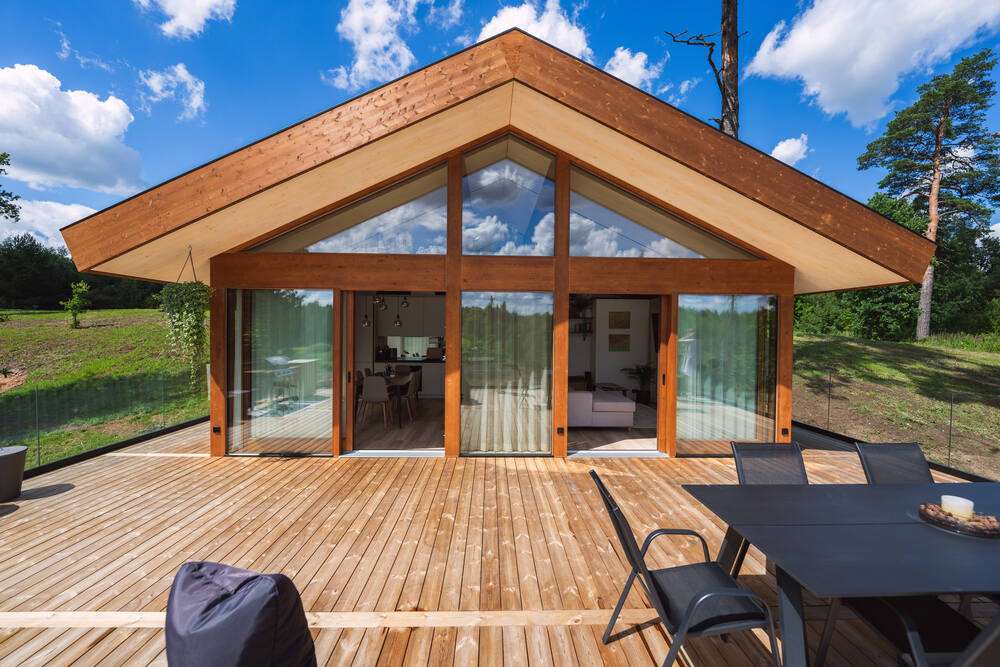
GET YOUR QUOTESODYL House is celebrated for crafting high-quality, elegantly designed prefab wooden homes that emphasize sustainability and modern aesthetics. Specialising in eco-friendly construction, ODYL House integrates sustainable materials and energy-efficient practices, resulting in homes that are both stylish and environmentally responsible.
With a focus on modern architecture and minimalist interiors, ODYL House appeals to homeowners who value both aesthetics and sustainability. Their homes are designed to endure diverse climate conditions, making them an attractive choice in international markets.
3. Oka Room
Oka Room focuses on small modular rooms for diverse applications, from home offices to art studios. Designed for easy installation and minimal environmental impact, Oka Room’s modular units offer homeowners flexible and cost-effective ways to add extra space to their properties.
4. Ruum Tiny Houses

Ruum Tiny Houses is an innovative player in the tiny home market, specialising in compact, sustainable modular living spaces. Ruum’s tiny houses are designed with a minimalist aesthetic and energy efficiency, using locally sourced wood to create eco-friendly spaces that suit various uses, from home offices to vacation cabins.
5. Wamp Group
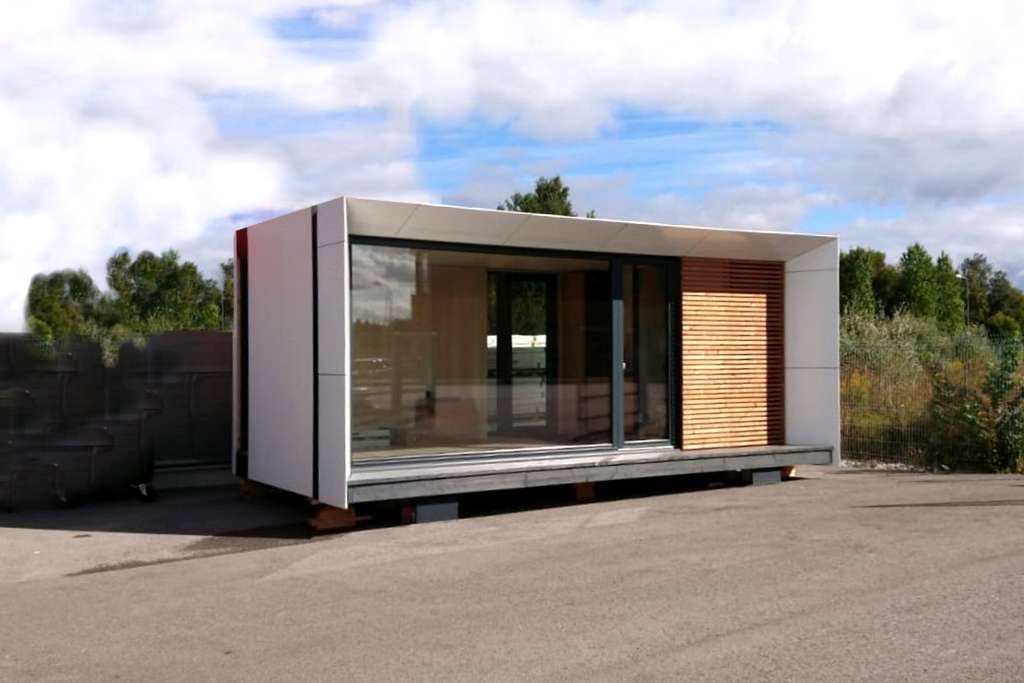
Wamp Group is a leader in sustainable, eco-friendly modular housing, using high-quality materials such as cross-laminated timber (CLT) and natural insulation. Known for its modern, open-plan designs, Wamp Group often incorporates renewable energy systems like solar panels, catering to homeowners who value both sustainability and style.
6. Modern Modular

Planning a prefab project?
Share a few details about your project and receive quotes from our network of manufacturers.
GET YOUR QUOTESModern Modular is known for sleek, minimalist designs that maximise space and functionality. Built with advanced materials and construction techniques, Modern Modular homes are recognised for their durability and energy efficiency, catering to modern homeowners looking for both style and sustainability.
7. CompactLiving
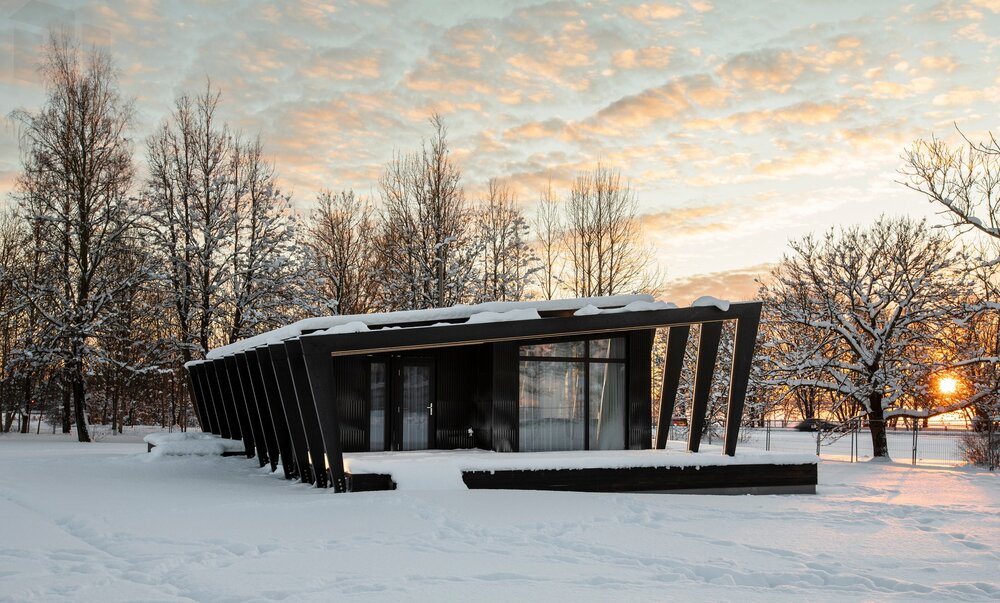
Based in Tallinn, CompactLiving designs, produces, and delivers modular and prefab homes, offering both ready-designed turnkey solutions and a full engineering and design service for private label modular house brands. Their end-to-end service covers design, factory production, transportation, and on-site assembly. CompactLiving also supplies production services to other modular house brands, making them one of the more versatile operators in the Estonian market.
8. Kodasema
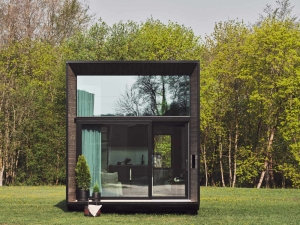
Kodasema is one of Estonia’s most design-forward prefab companies. Their flagship product, KODA, is a movable, factory-built turnkey unit delivered complete and ready for use after utility connections — no on-site construction required. KODA units serve equally well as homes, offices, hotels, retail spaces, or studios, and are engineered around a minimalist Nordic aesthetic and a genuinely small environmental footprint. The company has expanded its range to include modular sauna products, and KODA installations can be found across Europe and beyond.
9. Revonia
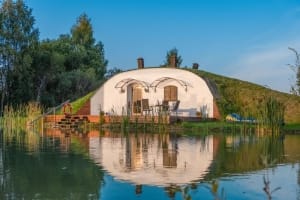
Revonia occupies a distinctive niche in the Estonian prefab market, specialising in vaulted structures and below-ground modular solutions alongside conventional prefab and modular houses. Their product range spans wine and earth cellars, saunas, underground grills, wellness centres, and kitchen rooms — all combining traditional craftsmanship with modern construction technology for fast installation. Revonia serves both residential and hospitality clients, with installations across Europe.
10. Norges Hus Modular Building
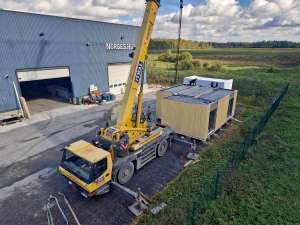
Norges Hus Modular Building focuses specifically on modular and prefabricated wooden houses built in a factory setting and transported to site for assembly. Their homes are available across Europe — from Scandinavia to the Mediterranean — with a consistent emphasis on energy efficiency, modern design, and customisability. The company publishes detailed technical information about their build systems, making them a good fit for buyers who want to understand what they’re getting before they commit.
11. PopUpHuts
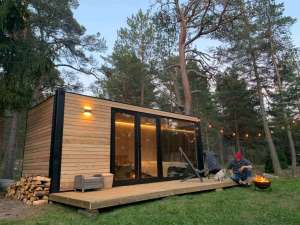
Based in Tallinn, PopUpHuts builds eco-friendly, pre-built tiny houses from upcycled shipping containers and sustainable materials. The units are fully insulated and ready to use on delivery — no assembly required — and can be transported easily across Europe. Their versatility is a key selling point: PopUpHuts are used as home offices, guest accommodation, yoga studios, gyms, and pop-up shops, among other applications. Their range includes container-based models as well as units combining traditional log construction with contemporary layouts.
12. Woodsons
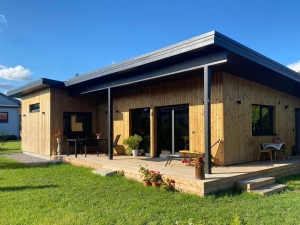
Based in Padise, Harjumaa, Woodsons takes a materials-first approach to prefab construction. The company manufactures innovative cross timber panels — produced without glue or harmful chemicals — which form the basis of their prefabricated houses, saunas, cabins, and shelters. The result is a building system that prioritises indoor air quality and environmental performance alongside structural precision. Woodsons also supplies their panels for use in furniture and other wood products, and offers fully customised designs with factory-cut windows and doors.
13. Hut
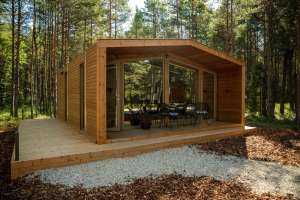
Hut manufactures a broad range of modular wooden buildings from their base in Võrumaa, Estonia. Their catalogue covers garden houses, grill houses, kiosks, home offices, greenhouses, sheds, saunas, and mobile wagons, alongside premium modular homes with smart home technology and high-quality finishes. All products are prefabricated for quick assembly, with a typical production time of 2–3 weeks.
14. Cube House
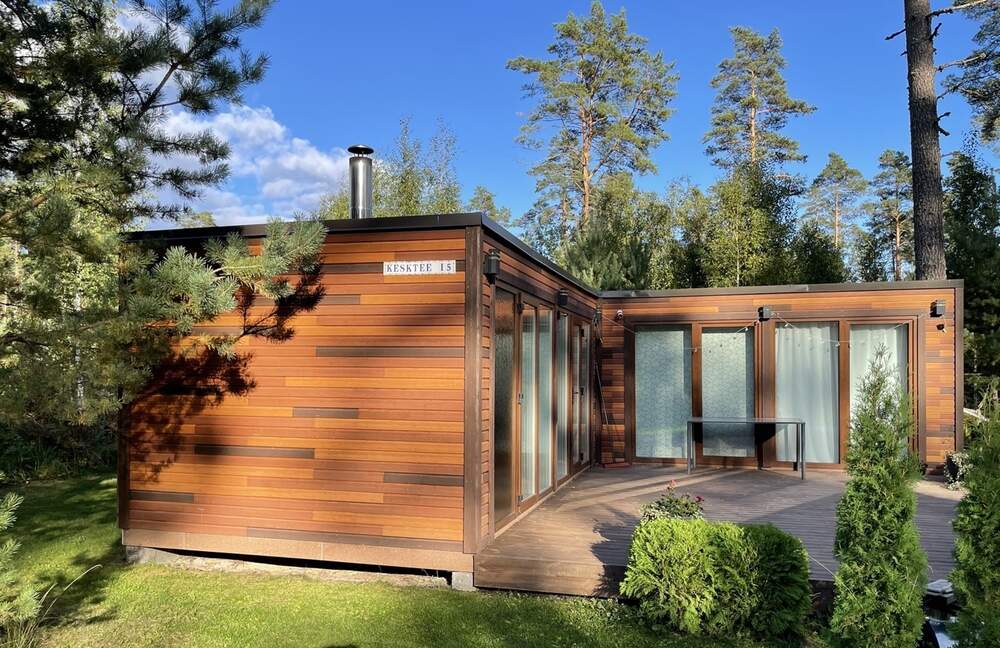
Based in Kohila, Raplamaa, Cube House designs and produces modular and compact homes for a wide range of uses — saunas, family houses, outdoor kitchens, terrace saunas, holiday homes, and outdoor offices. All units are delivered ready-made and can be installed quickly, often within a few hours. Cube House emphasises energy efficiency and smart solutions, with production times typically running 3–9 weeks.
15. HUBA House
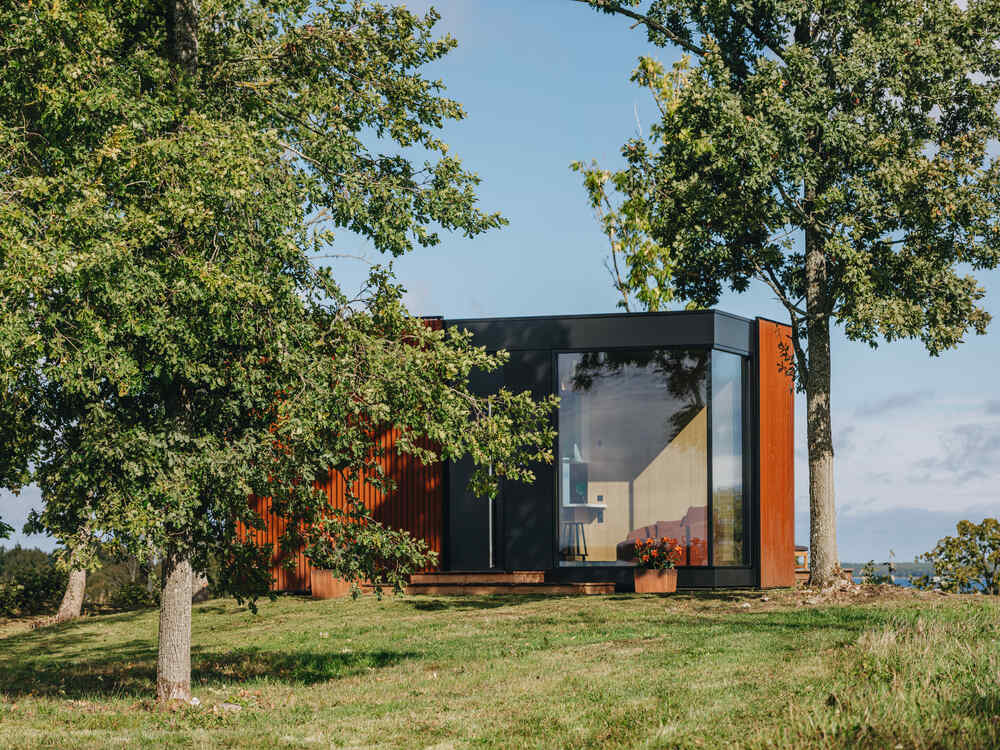
HUBA House designs and manufactures prefabricated holiday cabins aimed at resort and vacation village operators. Their compact, stylish units are built for year-round use using structural insulated panels (SIP), offering hotel-grade comfort alongside smart remote management of power, heating, and access. Cabins can be configured for off-grid use, and the company is actively expanding into international markets.
Estonia’s Global Success in Wooden House Exports
Estonia’s wooden houses have achieved a unique level of international acclaim, establishing the country as a top exporter of wooden houses in Europe. The strength of Estonia’s wooden housing industry lies in its high-quality materials, precision engineering, and emphasis on sustainable practices.
The result is a prefab housing industry that is environmentally responsible, resilient, and suited to various climate needs across the world. Estonian companies continue to build on this success with landmark projects, such as a 53-meter-tall timber building constructed with Estonian expertise in collaboration, showcasing the strength and versatility of timber as a core building material.
Conclusion
Estonia’s prefab housing industry exemplifies the country’s commitment to sustainable development, quality, and innovation. As sustainability becomes a priority for homeowners and governments alike, Estonia’s industry, with its strong commitment to eco-friendly practices and innovation, is well-positioned to lead in green construction solutions.
Advances in technology, such as zero-waste production and carbon-neutral practices, will further enhance Estonia’s standing as a global leader in prefab housing.
Estonian prefab manufacturers reflect the depth of expertise and creativity that define Estonian wooden house production. By merging advanced construction techniques with eco-conscious design, these companies offer a compelling alternative to traditional homes, reaching buyers in more than 70 countries.