6 minutes read
2025 has confirmed what had been taking shape for years: prefabricated housing in Europe has moved decisively into the mainstream. For a new generation of homeowners and developers, prefab is no longer an alternative, but a preferred way of building—valued for its design clarity, cost certainty, sustainability, and speed.
This shift is clearly reflected in the numbers. Over the past year, Spassio processed more than 10,000 information requests from over 4,000 qualified leads—more than double the volume recorded the year before, both in terms of enquiries and active project initiators.
Drawing directly from Spassio’s proprietary data, the article distils the key prefabricated housing trends shaping Europe in 2025—at a moment when all signs point to 2026 becoming a breakthrough year for industrialised and off-site construction. Beyond identifying trends, it reinforces Spassio’s ongoing mission to help future homeowners turn inspiration into a buildable, well-informed project.
Europe Is Building Prefab—But Not All Countries Build the Same Way
The thousands of information requests processed by Spassio over the past year reflect people facing real constraints and real decisions: rising construction costs, limited access to skilled labour, tighter energy regulations, and the need for predictable outcomes.
Taken together, these enquiries form more than a volume metric. They reveal where prefabricated construction is being actively considered as a solution—and how this consideration varies across countries, cultures, and building traditions.
When mapped geographically, Spassio’s data offers a clear picture of where prefab construction is already well established, and where it is rapidly gaining ground.
The Top Countries Requesting Prefabricated Homes
The geographic distribution of Spassio’s lead requests paints a clear picture of where prefabricated construction is most mature—and where it is accelerating fastest.
Top 10 countries by demand:
- Germany – 24.4%
- France – 10.7%
- Spain – 10.4%
- Netherlands – 7.3%
- United Kingdom – 6.9%
- Austria – 5.9%
- Belgium – 4.7%
- Portugal – 3.1%
- Switzerland – 2.5%
- Sweden – 1.7%
Germany’s leadership is no surprise. With decades of industrialised housing expertise, strict energy regulations, and a cultural preference for engineered precision, Germany continues to set the benchmark for prefab quality and performance.
What is notable, however, is the rapid consolidation of demand in Southern and Western Europe. Spain and France now sit firmly alongside northern markets, driven by rising construction costs, labour shortages, and growing awareness that prefab does not mean “standardised”—it means controlled, predictable, and design-driven.
For buyers, this means one thing: choice. European prefab is no longer defined by geography. A client in Spain can commission a Scandinavian-inspired timber home; a UK buyer can build with a Baltic manufacturer; a French family can opt for German modular precision.
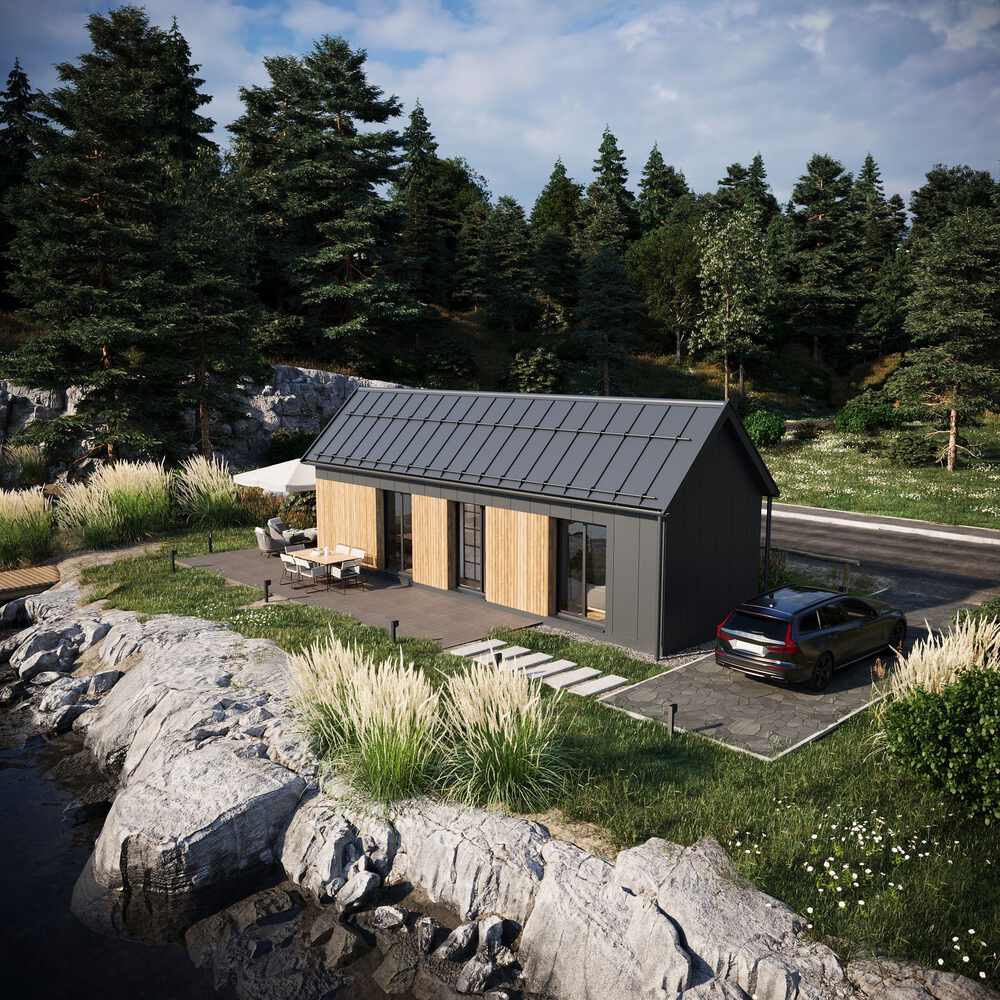
Modular Construction Dominates—And for Good Reason
Preferred Construction Systems in 2025
When buyers request information on Spassio, they must choose a construction system. Their preferences reveal how trust in industrialised building has evolved.
System demand breakdown:
- Modular – 56.2%
- Panel-built – 28.6%
- Log construction – 15.2%
Why Modular Leads the Market
Modular construction dominates because it answers the three most critical questions any self-builder asks:
- How long will it take?
- How much will it cost?
- What will I actually get?
Modular homes offer factory-controlled quality, parallel site and production timelines, and a level of predictability unmatched by traditional construction. Entire volumes are completed indoors, shipped, and assembled on-site in days—not months.
Panel-built systems remain highly relevant, especially in markets with strong local contractor ecosystems. They offer more flexibility during on-site assembly while still benefiting from industrial precision.
Log homes, meanwhile, retain a loyal following. Their continued demand reflects a desire for authentic materiality, biophilic living, and emotional connection to wood—particularly in rural, alpine, and Nordic contexts.
A Multilingual Market Reflecting a Cross-Border Reality
Language Preferences Tell a Bigger Story
Prefab housing in Europe is inherently international. Manufacturers sell across borders; buyers source globally. Language data from Spassio confirms this reality.
Lead requests by language:
- English – 45.4%
- German – 27.5%
- French – 10.3%
- Spanish – 7.9%
- Dutch – 6.8%
English has clearly become the lingua franca of European prefab, used not only by UK and Irish buyers, but by international clients navigating cross-border projects.
German’s strong position mirrors Germany’s leadership in manufacturing. French and Spanish growth reflects expanding adoption in markets where prefab was once viewed with scepticism.
For buyers, this multilingual ecosystem underscores the value of platforms like Spassio: translation is not just linguistic—it is technical, cultural, and procedural.
The Most Demanded Prefab House Models of 2025
Beyond systems and statistics, certain house models capture the collective imagination. In 2025, these are the designs buyers return to again and again.
1. Pineca Ineta
Thinking about building?
Share a few details about your project and receive quotes from our network of vetted manufacturers.
GET YOUR QUOTESA compact yet refined timber home that balances affordability with contemporary Nordic aesthetics. Its popularity reflects demand for well-proportioned, no-waste layouts ideal for first-time builders and secondary residences.
2. Zaskov Grup Wooden House

Rooted in Eastern European craftsmanship, this model appeals to buyers seeking robust construction, natural materials, and customisation potential—often for rural or semi-rural plots.
3. Norge House House 182

A spacious panel-built family home that reflects growing demand for larger, conventional layouts delivered with the cost predictability and efficiency of industrialised construction.
4. New Tiny House Newport

Tiny houses continue to attract attention—not as a trend, but as a lifestyle decision. Newport’s demand highlights interest in mobility, efficiency, and alternative living models.
5. SmartKUB Concept Kubo Family
Planning a prefab project?
Share a few details about your project and receive quotes from our network of manufacturers.
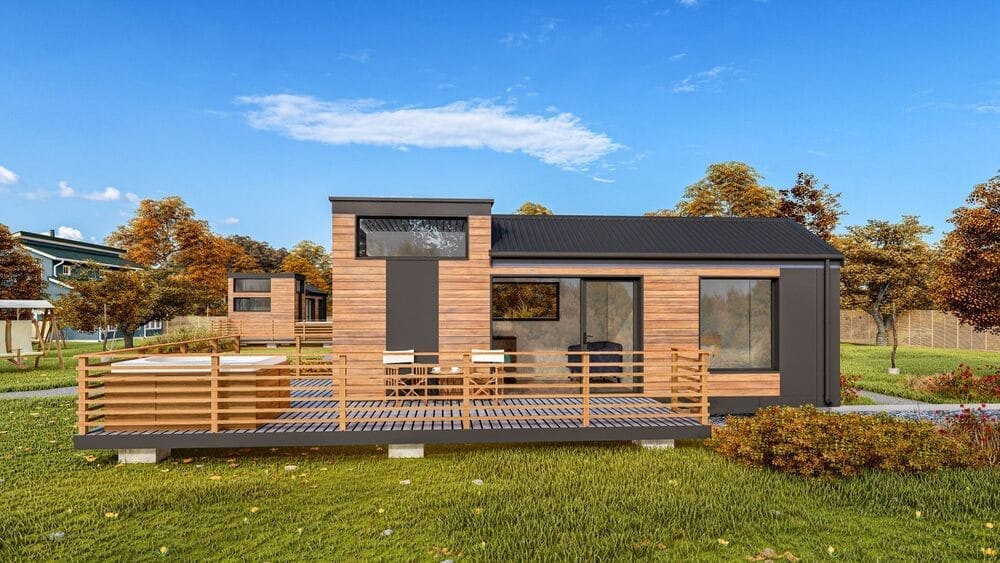
GET YOUR QUOTESPerhaps the clearest signal of where prefab is going. Modular, expandable, and system-based, Kubo Family reflects a desire for future-proof homes that can grow and adapt over time.
What Today’s Prefab Buyers Really Want
Looking across all data points, several themes emerge:
- Design matters more than ever. Buyers want smart and efficient architecture.
- Transparency beats promises. Clear specs, fixed pricing, and real timelines win trust.
- Sustainability is assumed, not marketed. Energy performance and material responsibility are baseline expectations.
- Guidance is essential. Most buyers are building for the first time and need structure, not sales pressure.
Prefab homes succeed when they simplify complexity—technically, emotionally, and financially.
Spassio’s Role in the New European Housing Landscape
Spassio does not manufacture houses. Its value lies elsewhere: clarity. By organising hundreds of prefab models, qualifying buyer intent, and connecting projects with the right manufacturers, Spassio acts as an architectural compass for self-builders navigating an increasingly complex market.
In a fragmented European landscape—different regulations, climates, budgets, and expectations—this role is becoming indispensable.
Looking Ahead: The Future of Prefabricated Homes in Europe
If 2025 proves anything, it’s this: prefabrication is no longer about speed alone. It’s about intentional living.
The next phase of prefab housing in Europe will be defined by:
- Greater architectural diversity
- More hybrid systems
- Deeper customization within standardized frameworks
- Stronger collaboration between buyers, manufacturers, and local professionals
For anyone considering building their own home, the message is clear: the tools, systems, and knowledge now exist to do it better than ever before.
Prefab is no longer the compromise. It is the advantage.
And the data proves it.