3 minutes read
In Traditional Construction, Your Quote Is Rarely a Fixed Price
Construction budgets have always slipped. What has changed is why.
For most of the past decade, cost overruns came down to poor planning or bad luck. Today something more structural is at work. Between 2021 and 2023, construction material costs across the EU rose sharply. In Germany, certain categories remain close to 90% above pre-crisis levels. Across the continent, materials today cost somewhere between 15% and 30% more than in 2019. In some segments, considerably more.
Inflation has slowed. Prices have not come down.
This matters because of how traditional construction is priced. A quote issued at the start of a project is, in practice, an estimate. Materials are sourced in stages. Contractors reprice as timelines extend. Market conditions shift between the moment a contract is signed and the moment a roof goes on. Many agreements include clauses permitting exactly these adjustments. Most clients, when they discover this, are surprised. They should not be.
In a traditional build, the client carries the risk across every phase, for the duration of the project.
How Prefab Changes the Equation
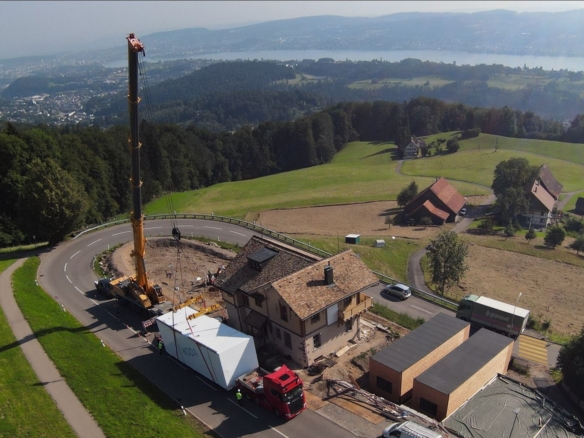
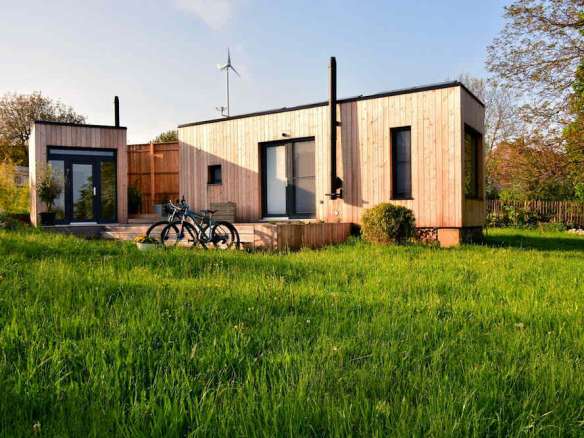
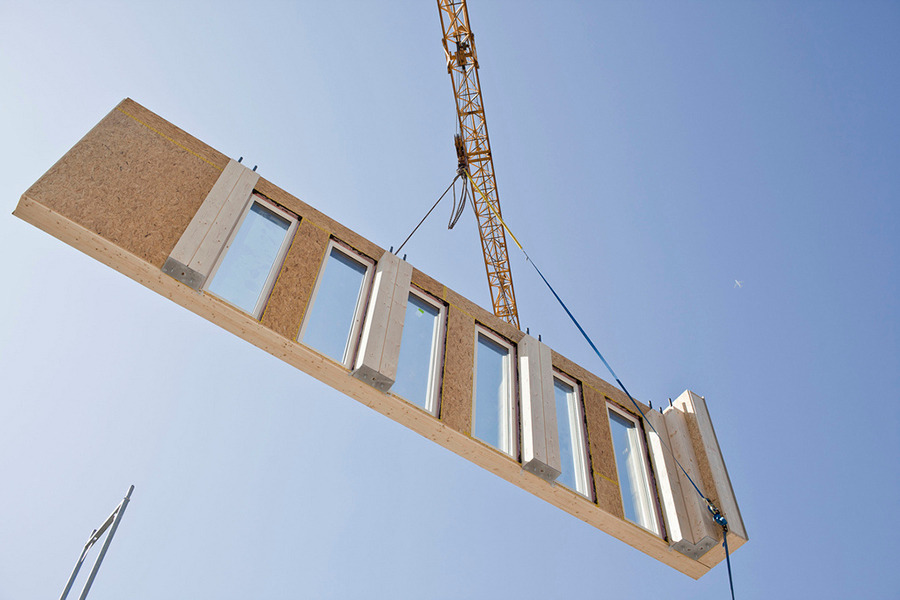
Prefabricated construction works differently. The majority of the build (walls, floors, entire volumetric modules) is manufactured in a controlled factory environment before reaching the site. Material procurement happens at scale, early, and internally. The price agreed at contract is, in most cases, the price paid for the structure.
When you sign a prefab contract, the manufacturer has already secured what is needed to deliver what was promised. Short-term market fluctuations are absorbed on their side. Production under controlled conditions also reduces the kind of delays that so often trigger repricing in traditional builds.
The client’s exposure shifts. Rather than sitting with risk throughout, you hand the largest part of it over at the point of signature.
What Price Lock Means, and What It Doesn’t
Prefab does not eliminate all risk. Site-specific costs (foundations, earthworks, utility connections, permits, landscaping) remain variable, tied to your plot, your location, and your local requirements. These are yours to manage.
As experienced professionals tend to say: prefab locks the house. The site is still your responsibility.
But the house is typically the largest cost in the project. Stabilising it early changes the financial picture considerably.
Why This Matters More in 2026
Geopolitical instability, energy market fragility, and supply chain disruption have made construction a high-risk undertaking by default. A project that starts in January may face a very different materials market by the time the structural work is complete. That window, between signing and building, is where traditional projects get into trouble.
Fixing the cost of the structure at the outset lets you plan financing properly, absorb fewer surprises, and make decisions with better information. That is worth something in any environment. In this one, it is worth quite a lot.
Speed Is Real. Certainty Is Rarer.
Prefab has long been marketed on speed. Speed is a genuine advantage. But in 2026, the more valuable thing on offer is a price that holds.
In a world where construction costs no longer behave predictably, that is harder to find than most buyers expect, until they have tried to build without it.