6 minutes read
Ask most people how they will pay for a house, and they picture mortgage funds being released on completion, or a bank transfer on moving day. Prefab buying rarely works that way. Because the home is manufactured before it is assembled, and because most of its value is created inside a factory rather than on your plot, payment happens in stages – tied not to calendar dates but to production milestones you can actually verify.
Understanding this rhythm matters more than most buyers expect. Get it right, and instalments become a useful tool: they let you track progress, manage cash flow, and hold the manufacturer accountable at each step. Get it wrong – sign a contract without reading the payment schedule closely – and you can end up funding a house that stalls halfway through the factory floor, with limited leverage to do anything about it.
Why prefab payment structures look different
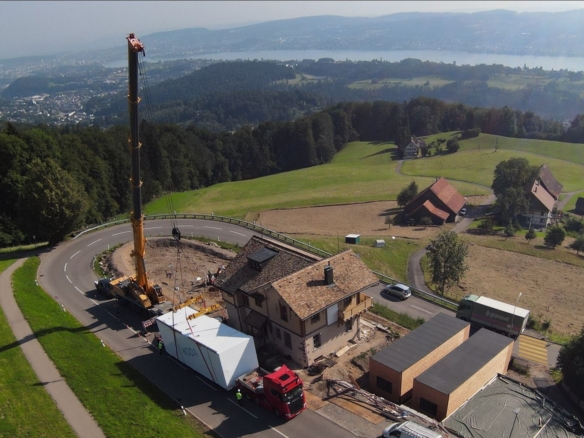
In traditional construction, payments usually follow the building itself: foundation poured, walls up, roof on. With prefab and modular homes, most of that value is created off-site, often before a single stone is laid on your land. A manufacturer ordering timber, steel framing or insulation for your module has already committed real capital before your house is visibly built anywhere you can see it.
That is the logic behind staged payments. They exist to align your money with the manufacturer’s actual costs, spreading risk across both sides rather than loading it entirely onto the buyer or the builder. Done properly, this protects you too: you are not handing over the full price for a home that has not left the factory, and you have natural checkpoints to confirm the project is moving as agreed.
The typical instalment structure
While every manufacturer sets its own terms, most European prefab and modular purchases follow a recognisable pattern, usually broken into four or five payments:
- Reservation or design deposit (5–10%)
This initial payment secures your place in the manufacturer’s production schedule and, in bespoke projects, covers the architectural and engineering work needed to finalise your design. It is typically due once you sign a preliminary agreement, before any building materials are ordered. - Contract signing (10–20%)
Once the design is approved and a binding contract is in place, a larger instalment follows. This is often the point where the manufacturer commits to your production slot and begins ordering long-lead materials – structural components, windows and bespoke fittings. - Start of production (30–40%)
The largest single payment usually falls here, once your modules or panels actually begin manufacturing. This is the capital-intensive phase for the manufacturer: labour, materials and factory time are all being spent on your specific home, rather than held in reserve. - Completion of factory production (20–30%)
This payment is due when your home is finished inside the factory and ready to leave for your site – sometimes tied to a factory inspection or approval visit, which is worth requesting if it is not automatically offered. - Delivery, assembly and handover (10–15%)
The final instalment is released once the home is delivered, assembled on site and connected to utilities. Some contracts hold back a smaller retention – often 5% – for a defined period after handover, released once any snagging issues have been resolved.
The exact percentages vary by manufacturer, country and project size, but the underlying logic tends to remain the same: smaller payments early on, a significant instalment when production actually starts, and a final release tied to a home you can walk into.
What to check before you sign
A payment schedule is only as good as what it is tied to. Before agreeing to any instalment plan, it is worth being precise about a few things.
What triggers each payment. “Start of production” should mean something verifiable – materials ordered, a module on the factory line – rather than simply an invoice date set unilaterally by the manufacturer. Ask for evidence at each stage, whether that is photographs, a production schedule or a factory visit.
What happens if a milestone slips. Manufacturing delays happen, particularly with cross-border projects involving customs, transport or site-access issues outside the manufacturer’s control. A good contract sets out what happens to the payment schedule if a milestone is delayed, rather than leaving your next instalment due regardless of progress.
Where your money sits. Ask whether early payments are held in an escrow account or paid directly to the manufacturer. Escrow arrangements can offer additional protection if a project runs into difficulties, although they are not universal across the industry. Do not assume such an arrangement exists unless it is expressly stated in the contract.
Currency and cross-border terms. If you are buying from a manufacturer in another country – increasingly common as European buyers compare Baltic, Scandinavian, Spanish or German manufacturers side by side – check whether instalments are fixed in your currency or the manufacturer’s, and who bears any exchange-rate movement between payments.
What is included in each figure. Confirm whether instalment percentages are calculated on the base house price or the full contract value, including options, transport and site works. A vague calculation base can quietly inflate later payments.
Financing instalments
Because prefab payments are staged rather than made as a single lump sum, they do not always fit neatly with a standard mortgage, where funds are generally released against a completed or sufficiently advanced property. Some lenders – particularly those familiar with self-build or modular projects – will release funds in tranches that mirror the manufacturer’s payment schedule. Others may require the home to be substantially complete before lending against it, which means buyers sometimes need to bridge the gap with savings or short-term finance during the earlier stages.
It is worth having this conversation with a lender before committing to a manufacturer’s payment plan, rather than afterwards. A schedule that looks reasonable from the manufacturer’s perspective can create a significant cash-flow gap if your financing only becomes available towards the end of the project.
The bigger picture
Instalments are not a bureaucratic inconvenience added to the prefab buying process – they are a direct reflection of how the industry actually builds. Because so much of a modular or prefab home’s value is created inside a factory, long before it reaches your plot, a well-structured payment plan allows both sides to move forward with greater confidence: the manufacturer secures the capital needed to build your home, while you retain clear checkpoints to confirm that the project is progressing as agreed.
The details are where the real protection lies. A payment schedule with clear, verifiable triggers, sensible provisions for delays and transparency about where your money sits between instalments is not simply good practice – it can make the difference between a smooth build and a stressful one. As you compare manufacturers, treat the payment structure with the same scrutiny you would give the floor plan or specification sheet. It deserves it.