6 minutes read
Imagine Stepping Into a House Designed by Apple
Not a showroom or a technology demonstration, but a place designed for everyday use. Light is deliberately controlled. Technology is integrated rather than foregrounded. Interfaces are minimal and largely unobtrusive. The house reads as a unified system, not a sequence of individual rooms.
At first, the idea may appear speculative. However, viewed in the context of brand-led architecture over the past two decades, it reads less as fantasy and more as an unresolved next step.
Because brands have been moving steadily—almost methodically—towards this point.
From Objects to Environments
For much of the late twentieth century, brands expressed themselves primarily through products. Then came stores: highly designed interiors that translated identity into physical space. Restaurants, cafés, and experiential venues followed, extending that spatial language into places where people lingered.
The decisive shift arrived with hotels.
When fashion and lifestyle brands began opening branded hotels, they crossed an important threshold. Hotels allowed brands to shape not only how things looked, but how daily life felt—how people slept, woke, moved through space, and experienced time. Living inside a brand, even temporarily, became part of the offer.
Over time, what once felt novel became familiar.
From Hotels to Permanent Living
This is where the shift accelerates.
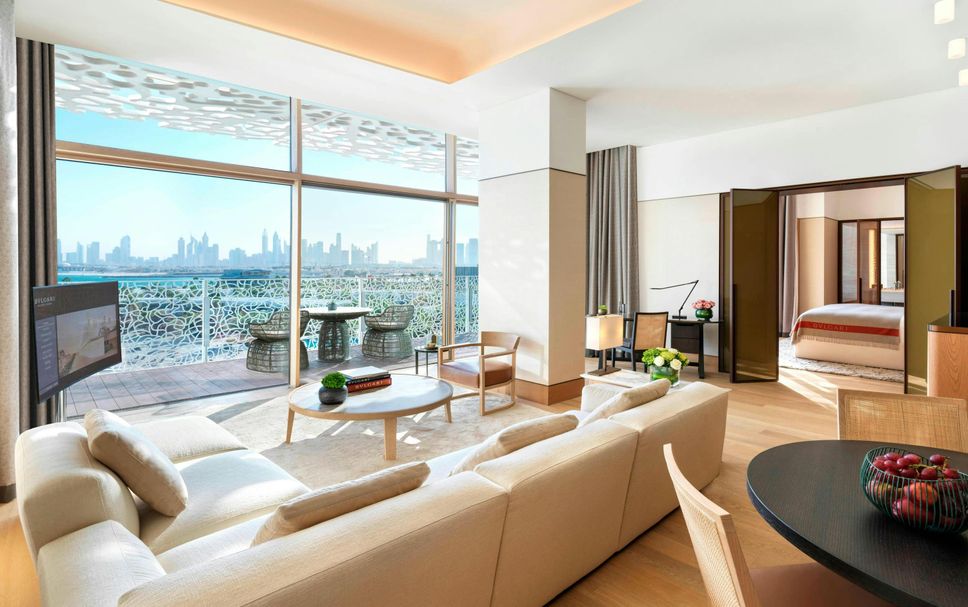
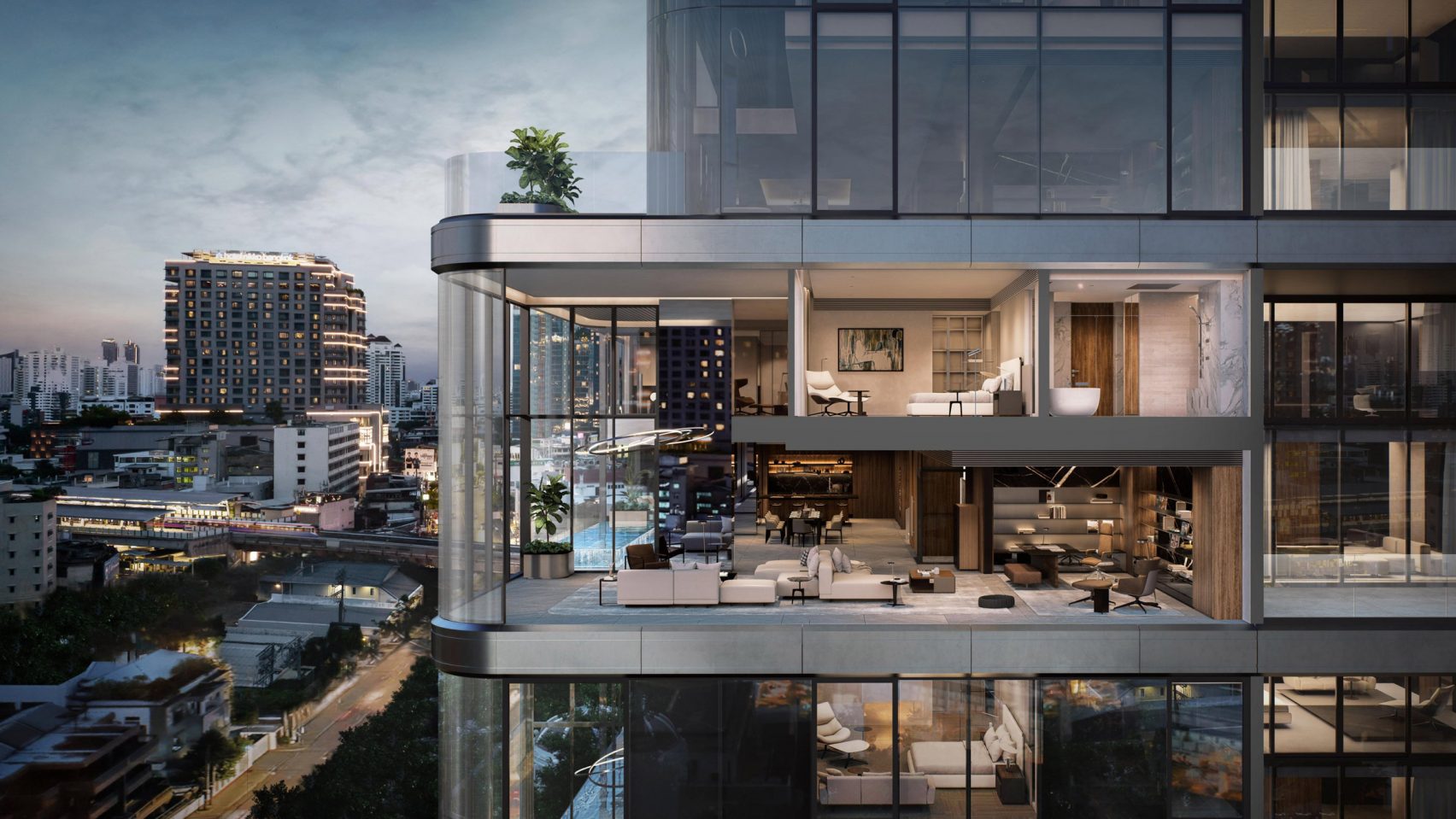
Brands began moving from temporary stays to permanent living. Automotive and luxury brands attached their names and design philosophies to residential towers in major global cities. Companies such as Porsche, Aston Martin, and Bugatti no longer operate solely in retail or hospitality; they now help shape the places people call home.
This is no longer marginal. The number of branded residential developments worldwide has grown from 169 in 2011 to more than 600 today, with projections exceeding 1,000 by 2030. Developers routinely command price premiums of 30 to 40 per cent for branded residences compared with equivalent non-branded luxury properties.
The market signal is unambiguous: people are willing to pay not just for space, but for alignment—with a brand, a worldview, a way of living.
Thinking about building?
Share a few details about your project and receive quotes from our network of vetted manufacturers.
GET YOUR QUOTESFrom Towers to Houses: A More Intimate Step
Here, a new question emerges.
Residential towers, for all their ambition, remain shared environments. They are mediated by lobbies, elevators, and collective amenities. The next step is more intimate, more personal: the detached house.
A house is where life unfolds without ceremony. It is where routines form, identities settle, and values are expressed quietly, day after day. If hotels allow brands to choreograph experience, and towers allow them to define permanent living at scale, houses allow brands to engage at the most personal level of all.
Return to the Apple house with this in mind. Or imagine a detached home designed by Porsche—not an apartment in a tower, which already exists, but a standalone dwelling. Is it compact and tightly controlled, or expansive and expressive? Is it closer to a precision-engineered studio or a generous family villa?
The ambiguity is instructive. It reveals that the proposition is not about form, but intent.
Prefabrication as Enabler, Not Aesthetic
If brands move into detached housing, prefabrication is likely to be the enabling construction method—but it does not determine the outcome.
Prefabrication offers predictability, quality control, and the ability to iterate from one version to the next. Homes can be conceived as complete systems rather than bespoke architectural statements. They can be refined, standardised, and reproduced with consistency.
Crucially, prefab does not prescribe scale or typology.
A prefabricated house may be modest or expansive, discreet or monumental. It may take the form of a compact dwelling, a family home, or a trophy villa in Ibiza. What shapes the result is not the construction technique, but the brand itself—its values, its audience, and its view of how people ought to live.
A Broader Field of Possibility
This is where the field widens.
So far, branded hotels and residential towers have been dominated by luxury and high-end lifestyle brands. Detached homes—particularly when enabled by prefab—invite other categories of brand into the built environment.
Consider Patagonia. It is difficult to imagine the brand expressed through a high-rise. It is far easier to picture a carefully designed house or cabin set within an iconic natural landscape—restrained, durable, and deeply attuned to its surroundings. Here, architecture becomes an extension of environmental values rather than a display of status.
Or consider a wellness brand such as Six Senses shaping a small constellation of homes organised around rest, longevity, and care. These are not hotel rooms, but dwellings where architecture itself forms part of the wellness proposition.
Some brands are naturally drawn to compact, almost ascetic dwellings. Others gravitate towards generous family homes or secluded villas. The range is wide because prefabrication is not the differentiator—identity is.
Signals Already in the Market
There are already signs pointing in this direction.
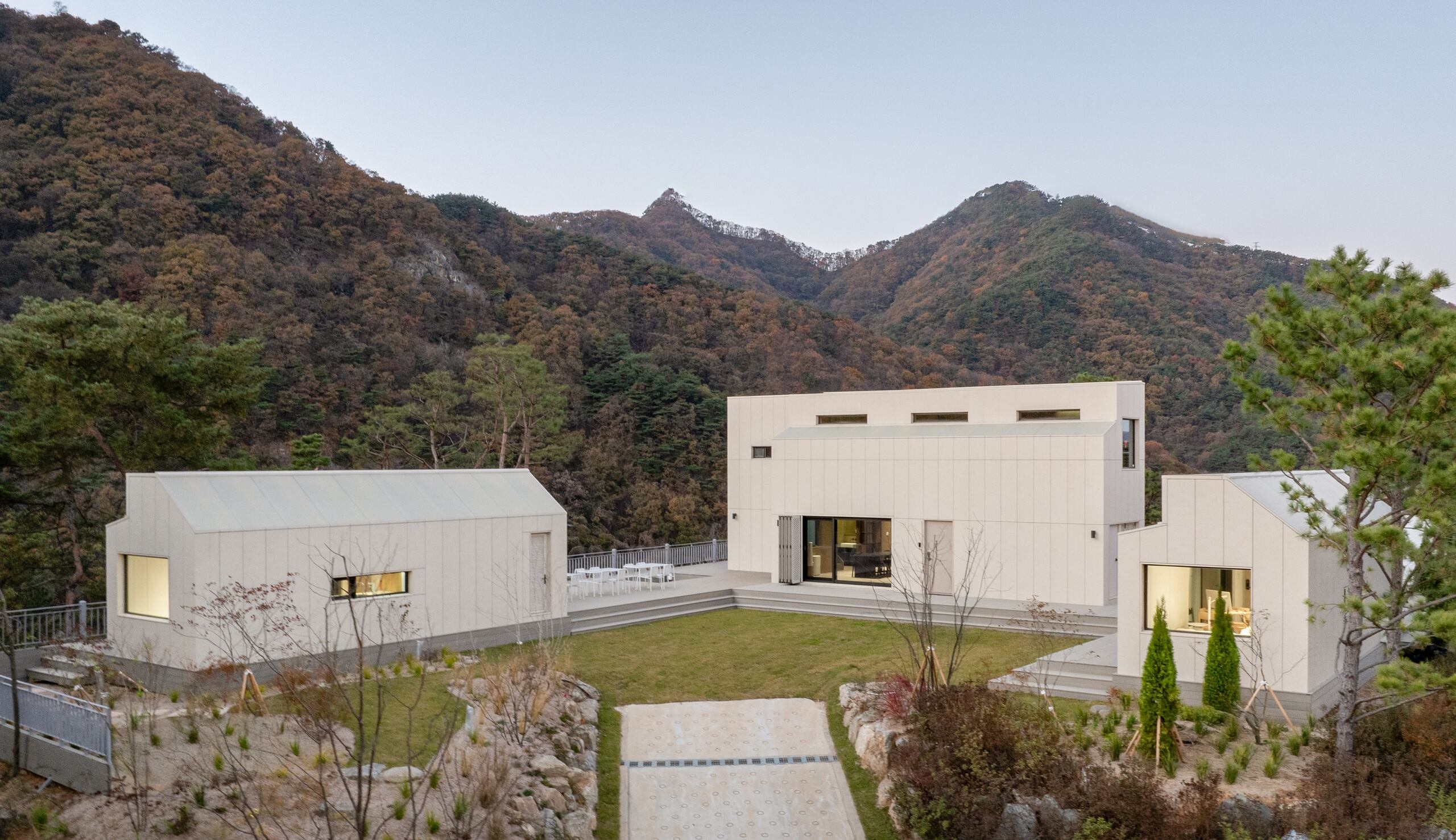
LG’s Smart Cottage frames the home as an integrated system, combining prefabricated construction with the company’s appliance, energy, and connectivity platforms to propose a coherent model of domestic living..
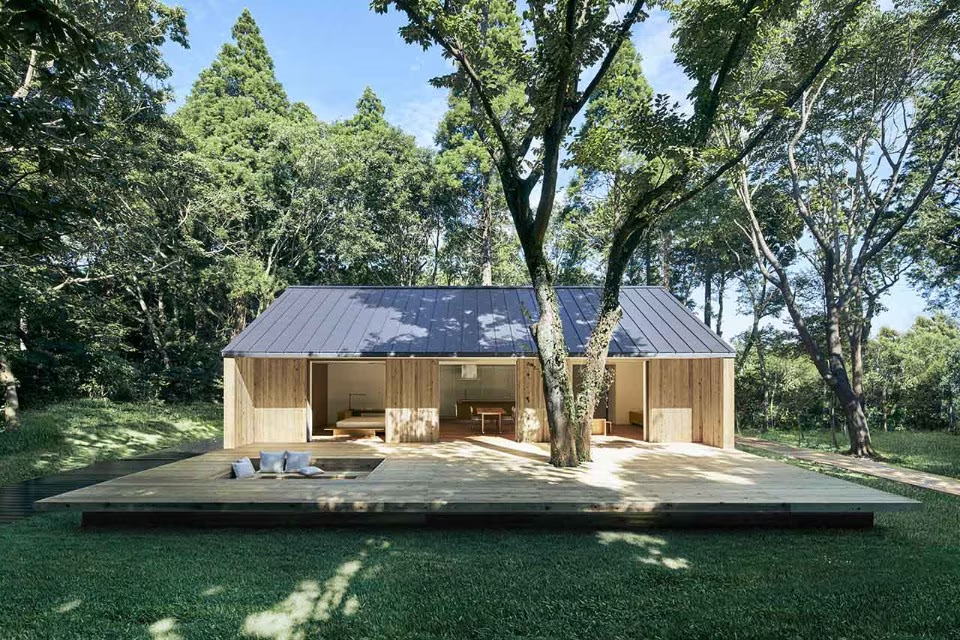
Muji has developed the Yō no Ie House (“Plain House”), a prefabricated home that translates its minimalist philosophy directly into architecture. Branding is quiet, almost invisible, yet unmistakable.
IKEA, through its BoKlok venture, approaches housing as a system that can be designed, standardised, and delivered at scale—demonstrating that even non-luxury brands can think seriously about how people live.
These projects differ in ambition and audience, but they converge on a shared premise: the home is becoming a legitimate medium for brand expression.
The Question That Remains
Viewed together, the trajectory is clear.
Brands move from products to stores.
From stores to hotels.
From hotels to branded residential towers.
The unresolved question is whether they now move from shared buildings to individual homes—and whether prefabrication makes that step viable.
If branded houses do emerge, they are unlikely to announce themselves loudly. Their influence will be quieter and more enduring. Homes shaped by values rather than logos. Architecture that reflects a considered view of living, not merely a strategy for selling.
At that point, the brand is no longer something you buy, wear, or visit.
It is something you live in.