10 minutes read
At Spassio, we help prefab buyers understand not only what they can build, but how the project is actually organised. Few words cause more confusion than “turnkey”. It sounds simple: one contract, one company, one finished home. In cross-border prefab construction, the reality is more layered.
To unpack what actually sits inside a turnkey offer, which work stays local no matter what the contract says, and who the model genuinely suits, Spassio spoke with Vitbūve, a prefab timber-frame manufacturer exporting across European markets.
Let’s start with the word itself. “Turnkey” sounds very reassuring to buyers: one contract, one price, one finished home. What should people understand about it?
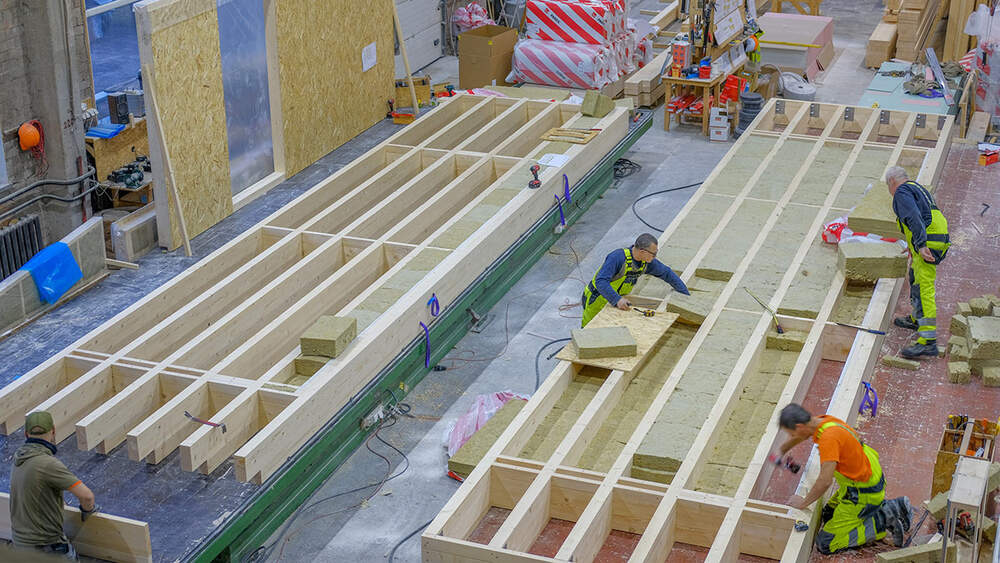
Vitbūve: In international prefab construction, a house is not produced and handed over in one continuous process. There is factory production, transport and site assembly, and then local works, regulated technical installations and interior finishing. These are very different kinds of work. One contract can put them under a single administrative umbrella, but it does not make them the same kind of work.
So the question is not only whether a house can be turnkey, but what actually sits inside the offer.
Vitbūve: Exactly. Many buyers ask, “Can this be built turnkey?” A better question is: which parts of the project become better, faster or more cost-efficient when handled by the manufacturer, and which parts are local work no matter who includes them in the quote?
Prefab creates most of its value before the house reaches the plot. Engineering, material planning, timber-frame elements, windows, doors, insulation layers and factory-controlled production are repeatable and precise, and they benefit from factory conditions and teams that work with the same construction system every day. That is where a manufacturer has a real advantage.
Buyers sometimes imagine one contract also means one team doing everything. Is that usually the case?
Vitbūve: Usually not. Even in local construction, turnkey mostly means coordination. A main contractor brings together foundation crews, electricians, plumbers, tilers and other trades, and gives the client one point of contact.
That service has real value, but it is not free. If a subcontractor is delayed, someone has to manage it. If finishing materials change, someone has to reprice and reschedule. If a small warranty issue appears after handover, someone has to take responsibility.
All of that is built into the turnkey price as coordination, risk and margin. That is not unfair; it is how contracting works. But the buyer should know what they are buying.
Does the picture change when the manufacturer is in one country and the house is built in another?
Vitbūve: It becomes even clearer. A manufacturer can produce a precise structural shell in controlled factory conditions and deliver it efficiently to another European market. That is exactly where prefabrication makes sense.
But it rarely makes sense to send every finishing trade across borders. A tiler or electrician from abroad usually costs more to mobilise than a local specialist, and in regulated trades they may need local recognition or certification before they can sign off the work.
So a foreign turnkey contractor often ends up hiring the same local trades the client could have hired directly. That local work then passes through the contractor, who coordinates it, takes responsibility for it and adds a margin.
For some clients, one point of contact is worth that. For others, it is simply a more expensive way to buy the same local labour.
Thinking about building?
Share a few details about your project and receive quotes from our network of vetted manufacturers.
GET YOUR QUOTESThere is also the idea that turnkey lets the buyer step away from decisions. Is that realistic?
Vitbūve: Not completely. A house still requires many decisions: flooring, tiles, bathroom fittings, sockets, lighting, kitchen layout, doors and colours. The word “turnkey” does not choose those things; someone still has to.
If the client stays involved, the convenience is mostly administrative: fewer companies to contact, but the same choices to approve. If the client steps back completely, the contractor chooses, and those choices tend to follow availability, supplier relationships and margin rather than the client’s personal taste.
That sounds especially sensitive when it comes to interiors.
Vitbūve: It is. A wall panel either matches the technical drawing or it does not. A roof element either fits or it does not. But a tile shade, a grout line or a socket height can be technically correct and still not match what the client imagined.
That is why finishing needs very clear communication. The more personal the choice, the more important it is to define who makes it, who approves it and how changes are priced.
So factory work and site work follow different logic.
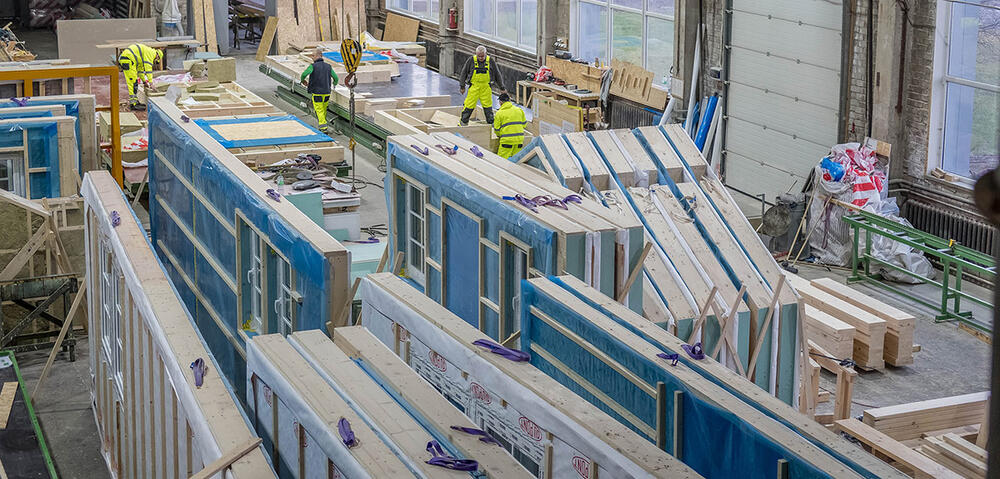
Vitbūve: Yes, and the boundary between them is fairly natural. A timber-frame structure travels well because it is designed to travel: wall and roof elements are produced in advance, protected, delivered and assembled quickly on site. A building plot cannot be standardised in the same way.
Take the most basic material of all: concrete. Fresh concrete starts setting the moment it is mixed and normally has to be poured within about an hour and a half to two hours, so it can only travel a limited distance from the batching plant. Foundations are local by physics, not by preference.
The same logic runs through the rest of the site. Foundation design depends on soil, frost depth and groundwater. Utility connections depend on local networks. Electrical and plumbing rules depend on the destination country, and even visible fittings such as sockets and switches are best sourced locally to match local standards.
None of this is a weakness of prefab construction. It is simply the line between what belongs in the factory and what belongs on the plot.
Where does Vitbūve itself draw that line? Do you offer full turnkey?
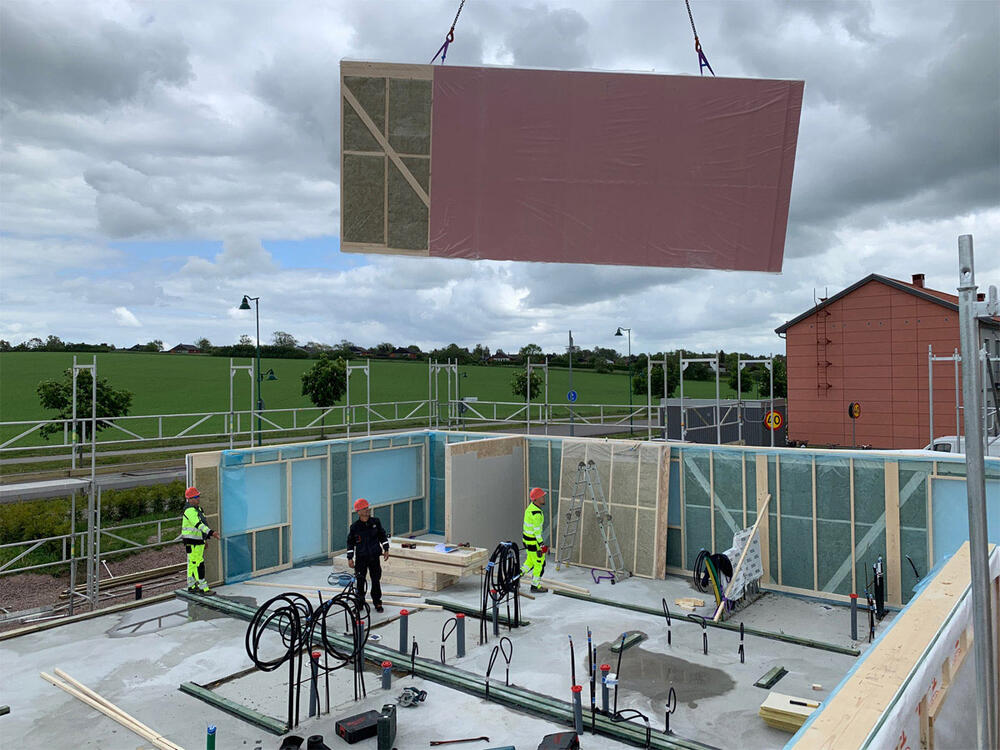
Vitbūve: We do not, and not because we think turnkey is wrong. Our scope is the part where a factory genuinely adds value: engineering, production, delivery and assembly of an airtight, externally finished shell, with technical preparation in the panels where the drawings call for it.
The foundation is built locally before assembly, to our drawings, and local trades handle the regulated installations and interior finishing once the building is weather-tight.
If we sold full turnkey abroad, we would mostly be subcontracting the same local specialists the client could hire directly, and adding our margin on top of their prices. We would rather the client keeps that money and that control.
There is a practical benefit later, too: when something small needs attention years after handover, the electrician who installed it is nearby, not in another country. The short of it: we stick to the work where we are demonstrably the best party to do it.
When buyers compare offers, they often look for the most complete scope. Is the widest offer always the best value?
Vitbūve: Not always. A wider scope brings convenience, but it can also mean more subcontracting, more coordination margin, more risk pricing and less transparency about what each part actually costs.
Sometimes a narrower, clearer scope is stronger: the manufacturer handles the engineered structure, production and assembly; local specialists handle foundations, technical systems and regulated work; and the client keeps direct control over finishing choices and local prices.
Each part of the project is then handled by the party best suited to it.
Four Common Prefab Completion Levels
How should buyers think about the different completion levels?
Vitbūve: Four levels cover most offers:
- Structural package: The timber-frame elements only, usually for clients who already have their own builder.
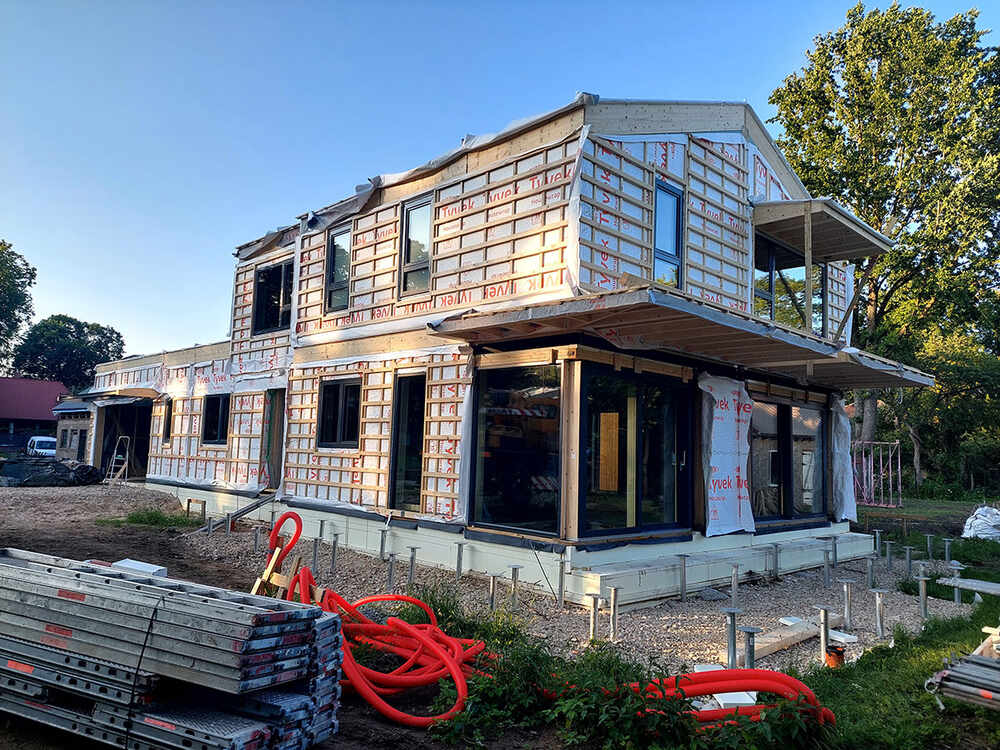
- Weather-tight shell: The structure is assembled and closed from the outside, with foundations and interiors remaining local.
- Weather-tight shell with technical preparation: Service routes, conduits or openings are prepared in the panels so that later technical work is easier.
- Full turnkey: One contract covers the broadest possible scope, including the coordination of local trades and finishing.
The right level depends on the client, the country, the plot, the budget and how involved the client wants to be.
Questions to Ask Before Accepting a Turnkey Offer
Before accepting a full turnkey offer, what should a buyer ask?
Vitbūve: Very practical questions:
- Which work is done by the contractor’s own team, and which is subcontracted locally?
- Which trades require local certification or inspection?
- Which items are excluded from the price?
- How are changes to finishing materials priced?
- Who handles small warranty issues after handover?
- Can foundations, utilities or interiors be organised directly with local specialists instead?
These questions do not make the project more complicated. They make its real structure visible before the contract is signed.
So the real question is not whether turnkey is good or bad. The real question is whether each part of the project becomes better by being placed inside one contract. Sometimes it does, sometimes it does not.
The smartest prefab project usually starts with a clear division of scope: what belongs in the factory, what belongs on site, and what the client genuinely wants someone else to coordinate.
Who Is the Right Turnkey Customer?
So who is the right customer for a full turnkey service, and who might be better suited to a narrower prefab scope?
Vitbūve: Full turnkey generally suits someone who wants one main point of contact and has limited time to coordinate local contractors. It can also make sense for a client who is building in an unfamiliar market and does not already know reliable foundation contractors, electricians, plumbers or finishing teams.
That client may prefer to place broader contractual responsibility with one company, even when some of the work is ultimately carried out by subcontractors. They understand that this convenience comes with an additional coordination margin and are comfortable making the main design and material decisions early so that the contractor can manage the execution.
And who is more likely to benefit from a narrower prefab scope?
Vitbūve: A narrower scope often suits a client who already has a trusted local builder or project manager. It can also be the better choice for someone who wants direct control over local prices and prefers to select finishing materials personally.
That client is usually comfortable organising the foundations, utility connections, technical installations and interiors separately. They may accept more administrative involvement in return for greater transparency between the cost of the factory-produced house and the cost of the work carried out locally.
So neither type of client is making the wrong choice.
Vitbūve: No. If a client values simplicity and single-point coordination, turnkey may be worth the additional cost. If they value cost control and personal control over finishing decisions, a narrower scope with local coordination is often the smarter route.
In prefab construction, the best project is rarely the one with the broadest label. It is the one where every responsibility is placed with the party best suited to manage it.
Special thanks to Vitbūve for contributing to the Spassio knowledge hub. For more insights into prefab manufacturing, explore Vitbūve’s articles and case studies on their blog.