5 minutes read
Factory-built construction is often associated with speed, but for UCUBER the bigger advantage lies in control: tighter tolerances, fewer variables on site and a more predictable path from design to completed building.
We spoke with Piotr Kęsek, Director of Engineering and Design DPT at Ucuber, about how its steel-framed volumetric system works, what it takes to build for demanding climates, and why energy performance and measurable sustainability are becoming increasingly important in modular construction.
Photography © UCUBER
UCUBER works with volumetric modules that are already highly finished when they leave the factory. What does that change in practice?
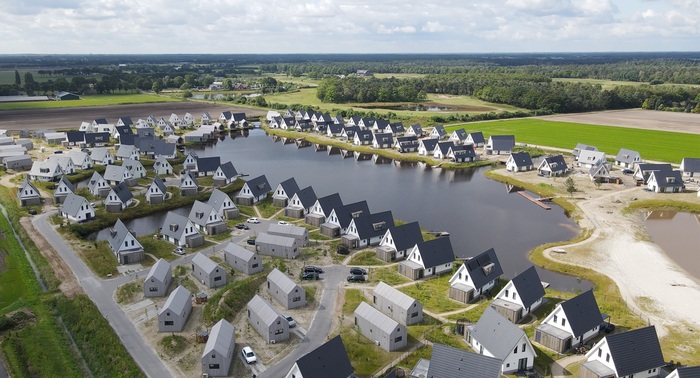
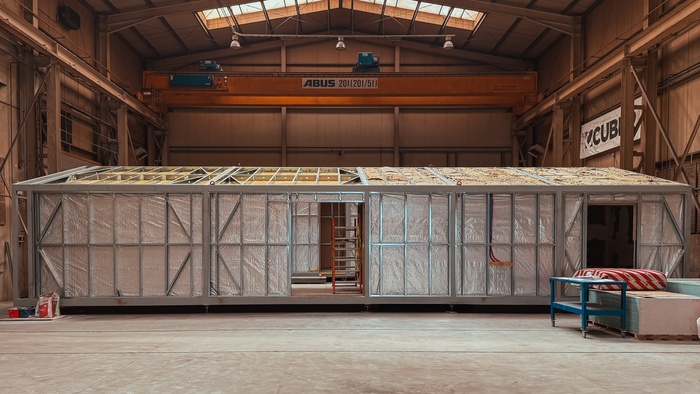
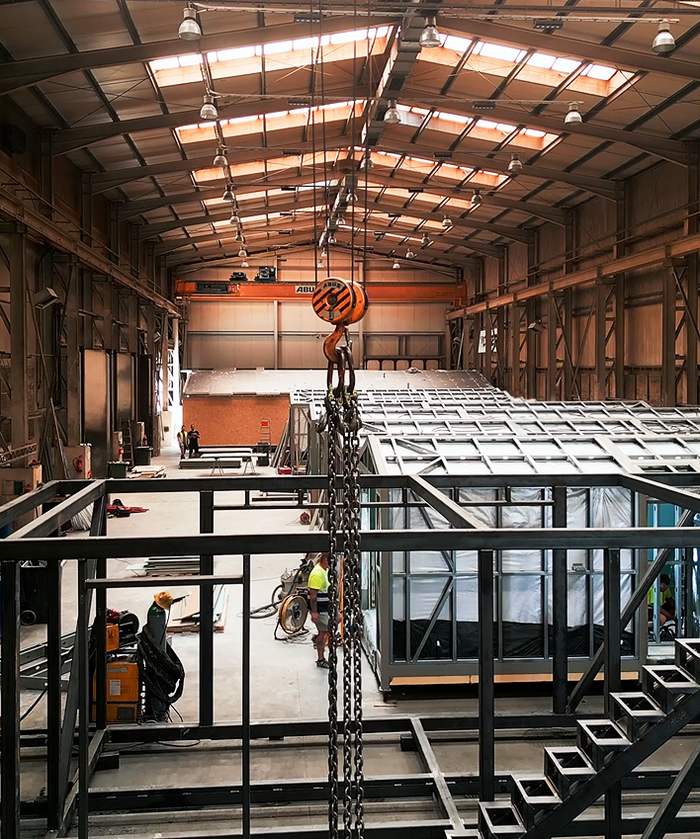
Piotr Kęsek: Our modules leave the factory approximately 90% complete. That means a large part of the construction process takes place in a controlled environment rather than on site.
During production, we can continuously check geometry, welds, connections and each stage of assembly. This allows us to work to a repeatable tolerance of around ±2 mm and reduces many of the variables that normally come with traditional site construction.
It gives us much more control over quality and consistency before the building ever reaches its final location.
Steel is at the heart of your system. Why is it particularly well suited to modular construction?
Piotr Kęsek: Steel gives us a very useful combination of structural strength and flexibility.
It allows us to create long spans and relatively slender structural elements, while remaining non-combustible and dimensionally stable. That becomes especially important when modules have to be transported, lifted and connected on site.
It is also a very adaptable system. We can use it for projects in very different environments, from tropical climates to arctic conditions, and even for buildings located on water.
When a project requires higher levels of structural, fire or acoustic performance, we can also combine the steel frame with precast concrete elements.
Everything is designed in accordance with the Eurocodes, while BIM provides the common reference throughout design and production.
Thinking about building?
Share a few details about your project and receive quotes from our network of vetted manufacturers.
GET YOUR QUOTESModular construction is sometimes presented mainly as a manufacturing process. How important is the team behind the system?
Piotr Kęsek: It is fundamental.
A good modular system is not only about what happens inside the factory. Decisions made during design affect production, transport, installation, cost and ultimately the investor’s business case.
That is why our designers, production teams, logistics specialists, assembly crews and commercial department work as part of the same process.
We can therefore support the client from the early technical decisions through design, production, transport and final assembly.
For the investor, that means fewer interfaces to manage and a single partner taking responsibility across the different stages of the project.
You have worked on projects for markets such as Sweden and Iceland. What changes when you are designing for climates like these?
Piotr Kęsek: Quite a lot.
In those markets, buildings may have to deal with high snow and wind loads, seismic movement, driving rain, freeze-thaw cycles and, in coastal areas, significant corrosion exposure.
So durability cannot be treated as a standard specification that is simply repeated from one project to another.
The structure, façade build-up, connections, waterproofing and corrosion protection all have to respond to the actual location and exposure conditions.
For steel components, for example, corrosion protection can range from class C2 through to C5-M for severe marine and industrial environments.
Does producing the modules indoors give you an advantage in those environments?
Piotr Kęsek: Yes, particularly when it comes to the building envelope.
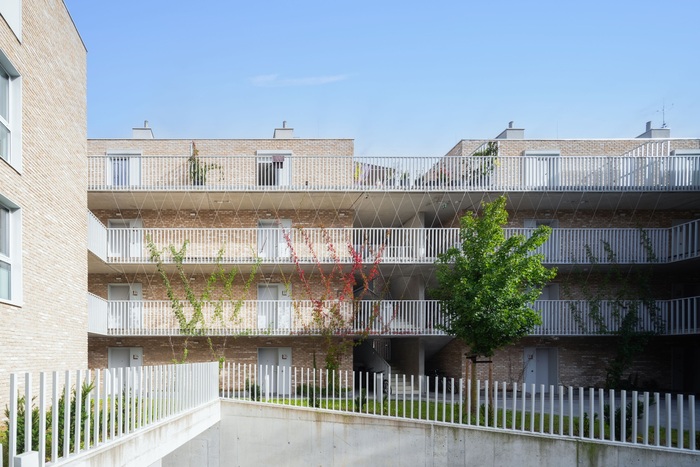
Critical junctions, waterproofing and weather-tightness can be completed and inspected inside the factory before the modules are transported.
That means less critical work needs to be carried out outdoors in rain, snow, wind or low temperatures.
It reduces weather-related uncertainty during construction and gives us more control over parts of the building that are particularly important for long-term durability.
Energy performance is becoming increasingly demanding across Europe. What can your standard system achieve?
Piotr Kęsek: Our standard envelope can achieve U-values of ≤0.18 W/m²K for walls, ≤0.15 W/m²K for roofs, ≤0.25 W/m²K for floors and ≤0.90 W/m²K for windows.
From there, the specification can be developed further depending on the project and the local market. That can include moving towards standards such as KfW 40 or Passive House.
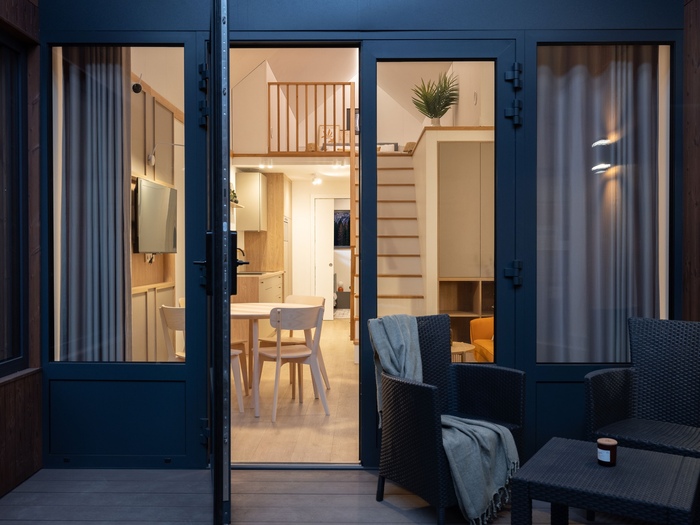
Systems such as heat pumps, photovoltaic panels, mechanical ventilation with heat recovery, underfloor heating and building management systems can also be integrated directly into the architecture and MEP design.
The important thing is to consider them from the beginning rather than treating energy efficiency as something that is added later.
And when you talk about sustainability, are you mainly looking at energy use once the building is occupied?
Piotr Kęsek: No. Operational energy is important, but it is only one part of the building’s environmental impact.
Modular construction can also improve the efficiency of material use, procurement and production, while reducing construction waste.
With steel-framed modular construction, optimised design and controlled manufacturing can help reduce embodied carbon. Depending on the project, methodology and comparison baseline, reductions of approximately 40–45% may be achievable compared with conventional construction.
But we believe these claims should be supported by data.
Environmental Product Declarations can be connected with BIM-based material information, allowing us to move from BIM to IFC and then into carbon-reporting tools.
This gives investors measurable information that can support life-cycle assessments, ESG reporting and certification systems such as BREEAM and DGNB.
The same approach can also be adapted to national requirements, including climate declarations for new buildings in Sweden.
So when you look at modular construction, speed is only one part of the value proposition.
Piotr Kęsek: Exactly.
Building faster is useful, but speed on its own is not enough.
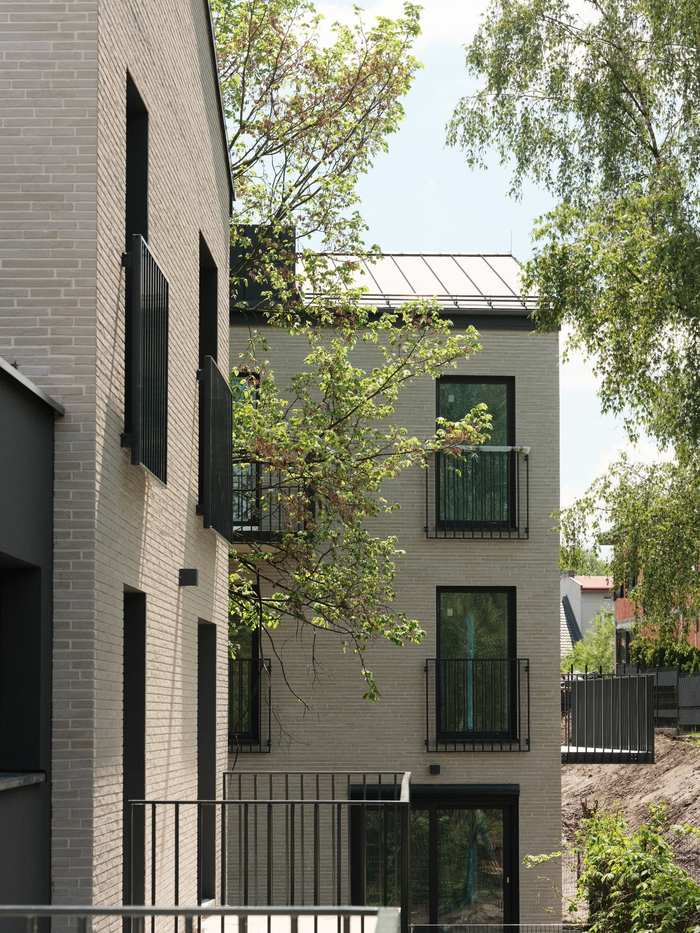
The bigger advantage is being able to combine speed with precision, repeatability, quality control and greater predictability throughout the project.
For us, that is where modular construction becomes particularly valuable: when it gives the investor more control over both the technical process and the final result.
Planning a prefab project?
Share a few details about your project and receive quotes from our network of manufacturers.
GET YOUR QUOTES
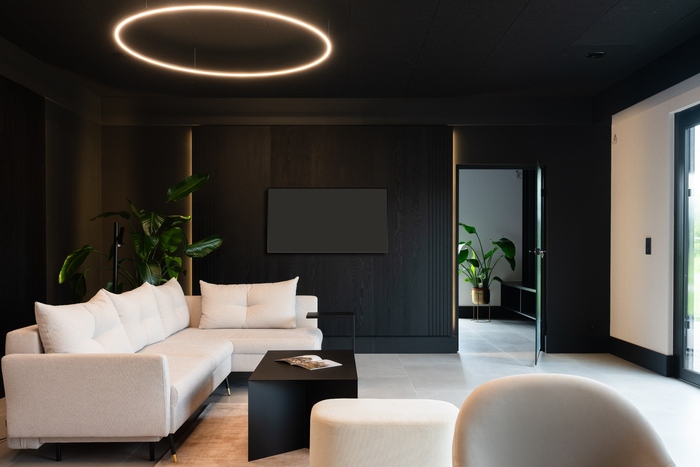
All photographs are the property of UCUBER